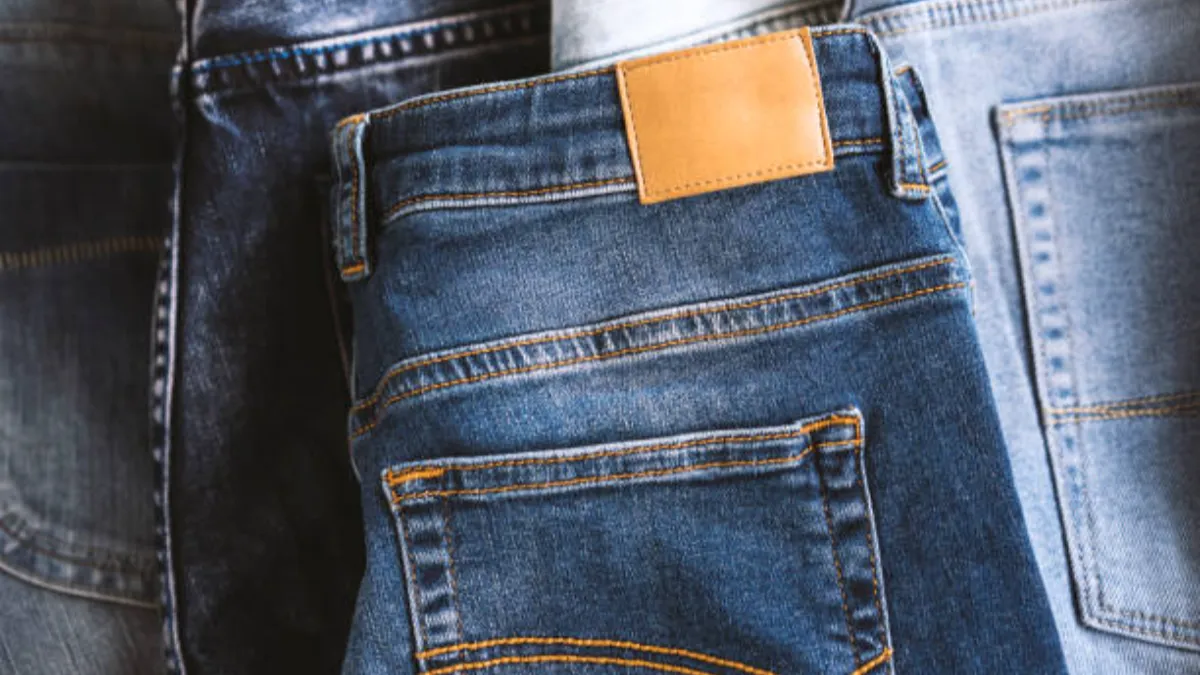
You wear them almost every day, but have you ever checked what actually goes into your pair of jeans?
While most people simply answer “コットン,” the reality is a bit more technical. Denim is a complex fabric defined by a specific blend of fibers, precise yarn twists, and a unique weaving structure that makes it one of the most durable textiles available.
Whether you are a denim enthusiast trying to understand why raw denim feels so stiff, or a fashion brand looking to source the material for your next collection, understanding the composition is key. This guide breaks down exactly what denim is made of, from the raw fibers to the finished fabric.
The Core Ingredients That Define Denim

歴史的に, denim was defined by a single ingredient: 100% コットン. しかし, the fabric has evolved significantly. 今日, most denim is a composite material designed to balance the rugged feel of the past with the comfort required by modern consumers.
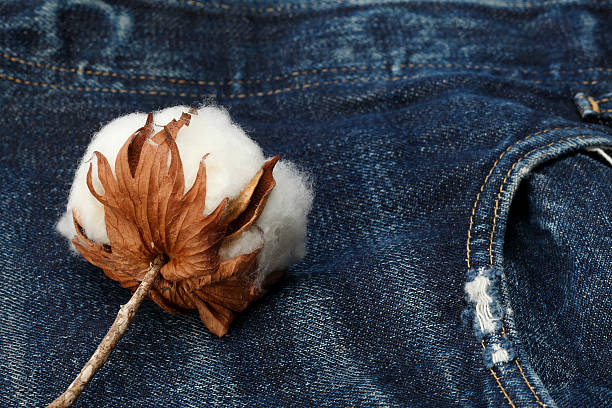
The foundation is almost always cotton, chosen for its natural tensile strength and breathability. But to improve performance, modern mills frequently blend cotton with synthetic fibers.
- エラスタン (Spandex): Added for stretch and recovery.
- ポリエステル: Added to increase durability and control shrinkage.
Regardless of the blend, quality starts with the fiber length. Manufacturers prefer long-staple cotton, often spun into Ring-Spun yarns, because longer fibers create a smoother surface. This allows the fabric to hold dye better and soften naturally over time, rather than breaking down.
The Signature Diagonal Weave Pattern

How the Twill Weave Creates the Look
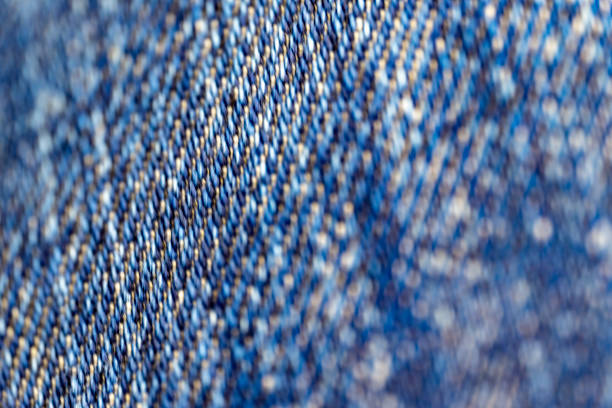
Distinct from a simple checkerboard plain weave, denim is engineered using a Twill Weave. This is the technical feature that separates denim from standard canvas.
This structure relies on the interaction between the vertical warp and the horizontal weft yarns. In a classic 3/1 twill construction, the blue warp thread crosses over three white weft threads before going under one. This high density of yarns makes the fabric significantly heavier and more abrasion-resistant than standard cotton weaves.
Why the Inside Is White and the Outside Is Blue
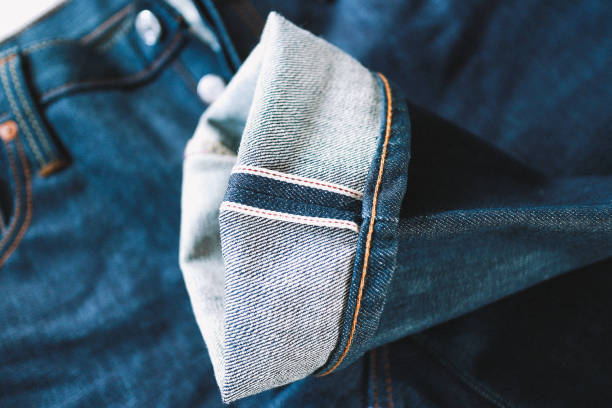
The signature contrast of a blue face and a white back is a direct result of the 3/1 weaving structure.
Because the blue warp yarns cross over multiple weft yarns, they dominate the surface face of the デニム生地. Meanwhile, the undyed, natural white weft yarns remain mostly on the back. This is why cuffing your jeans reveals a contrasting white interior.
Left Hand Twill Compared to Right Hand Twill
The weave direction dictates the fabric’s softness and fading characteristics.
- Right Hand Twill (RHT): The industry standard used by brands like Levi’s. The lines run diagonally up to the right. It creates a tighter structure that is generally more durable and abrasion-resistant.
- Left Hand Twill (LHT): The lines run up to the left. By weaving against the natural twist of the yarn, LHT creates a fabric that feels significantly softer and fades with a vertical, streaky aesthetic over time.
Beyond 100% コットン: Modern Material Blends
Traditionalists prefer pure cotton, but most consumers today want jeans they can actually move in. Mills achieve this flexibility by engineering specific fiber blends.
Why Elastane Is Added for Stretch
To create form-fitting jeans that don’t restrict movement, manufacturers blend cotton with synthetic elastomers.
Manufacturers typically add 1–5% elastane, such as Spandex or Lycra. The best stretch denim uses “core-spun” technology, where the stretchy spandex filament is hidden inside a wrapped outer layer of cotton. This provides the authentic look of denim with the comfort of activewear.
Polyester Blends for Strength and Durability
Durability is often improved by adding polyester. In workwear or high-friction denim, polyester texturized yarns ranging from 300 に 600 denier are used in the weft.
In premium segments, advanced polyesters like T400 (Elastomultiester) are used to improve shape retention, preventing the jeans from “bagging out” at the knees after repeated wear.
Common Fabric Ratios You Should Know
When sourcing or buying denim, you will often see these ratios on the label:
- 100% コットン: Rigid, 本物, zero stretch.
- 98% コットン / 2% エラスタン: The industry standard for “comfort stretch.”
- 70% コットン / 28% ポリエステル / 2% エラスタン: A common “tri-blend” designed for high durability and shape retention.
Unleash Your Vision: Premium Custom Denim, From Concept to Collection.
How Denim Gets Its Iconic Blue Color

Denim’s unique fading characteristic stems from the specific chemical behavior of Indigo dye. Unlike standard garment dyes that soak completely into the fiber, indigo behaves differently.
の “Ring Dyeing” プロセス
The reason your jeans are blue is a process called Ring Dyeing. Indigo molecules are too large to easily penetrate the core of the cotton yarn. Instead of soaking all the way through, the dye sits only on the surface layers of the yarn, like a skin. The center of the yarn remains white. This physical structure is the prerequisite for the unique fading characteristics of denim.
The Difference Between Natural and Synthetic Indigo
While the dyeing mechanism is the same, the source of the dye varies significantly in commercial production.
- Natural Indigo: Extracted from the Indigofera plant. It is expensive, labor-intensive, and produces a unique, slightly greenish-blue hue that varies from batch to batch.
- Synthetic Indigo: Used in 99% of modern jeans. It provides a pure, deep blue tone and allows for consistent, スケーラブルな生産.
As you wear the jeans, the dye slowly rubs off the surface, revealing the white cotton core underneath. This mechanical loss of dye is what creates “色褪せる” または “whiskers.”
Sulfur Dyeing for Black and Colored Denim
Black jeans often use sulfur dyes. Unlike indigo, sulfur dyes bond differently with the fiber. Some are engineered to hold their color, known as “Stay Black” technology, while others are designed to wash down to a grey, mimicking the aging process of traditional blue denim.
Heavyweight vs Lightweight Fabric Options
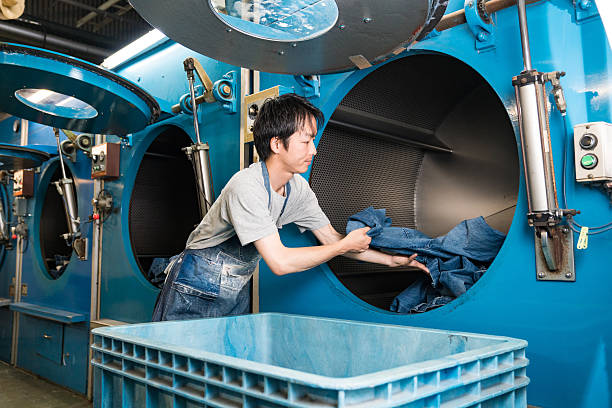
Denim is strictly categorized by its weight, measured in ounces per square yard (オズ). This dictates both the durability and the season suitability of the fabric.
When to Choose Lightweight Denim
Lightweight denim weighing 10.5 oz or less is the go-to choice for summer collections and garments that need to move with the body, like dresses or wide-leg trousers.
Beyond just being cooler to wear, lightweight fabrics offer a fluid drape that heavy twills cannot achieve. They are soft right off the production line, offering immediate comfort. For brands targeting the mass market or humid climates, this eliminates the “break-in” barrier that often deters average consumers.
The Benefits of Heavyweight Raw Denim
For heritage brands and denim purists, heavyweight fabric above 16 oz is the gold standard.
Its primary advantage is structural memory. The fabric is stiff enough to hold its shape, creating sharp, permanent creases behind the knees and at the hips. 時間とともに, this results in high-contrast fades characterized by deep whites against dark blues that lighter fabrics simply cannot produce. While it requires patience to break in, the tradeoff is a garment that is virtually indestructible and highly personalized to the wearer.
Quick Comparison of Denim Weights
| カテゴリ | 体重範囲 | Seasonality | Break-in Period | Best Application |
|---|---|---|---|---|
| 軽量 | 4 – 10.5 オズ | Spring / Summer | None. Soft and comfortable immediately off the shelf. | Denim shirts, summer dresses, wide-leg trousers. |
| Mid-weight | 11 – 15.5 オズ | All-Season (Year-round) | Minimal. Requires 3–5 wears to soften and mold to the body. | The classic standard for jeans (例えば, Levi’s 501s), デニムジャケット. |
| ヘビー級 | 16 – 32 オズ | Fall / Winter | Significant. Can take weeks or months to fully break in. | Heritage workwear, motorcycle gear, high-contrast fading projects. |
Sustainable and Eco-Friendly Fabric Choices

The denim industry is under pressure to reduce its environmental impact. Modern composition is shifting toward responsible sourcing.
Organic Cotton and Recycled Fibers
Adopting sustainable materials is a priority for most modern brands. しかし, on the factory floor, this decision creates specific technical challenges regarding fiber length and tensile strength.
- オーガニックコットン (GOTS/OCS Certified): Physically, オーガニックコットン performs similarly to conventional cotton, but it is grown without GMO seeds or synthetic pesticides. メーカー向け, the key difference lies in the certification trail. High-quality organic denim requires strict segregation in the mill to prevent cross-contamination, ensuring the final fabric meets Global Organic Textile Standard (ゴッツ) requirements.
- Recycled Cotton (の “Short Fiber” Challenge): This is where engineering becomes critical. Mechanical recycling involves shredding old fabric, which inevitably breaks the cotton fibers, making them significantly shorter and weaker than virgin fibers.
Technical Implication: To maintain the fabric’s tear strength, we must blend recycled fibers with long-staple virgin cotton or synthetic reinforcements. Consequently, we typically cap the recycled content at 20–40% to ensure the jeans remain durable.
Tencel and Hemp as Modern Alternatives
You will increasingly see fibers like Tencel (リヨセル) or Hemp blended into denim. Beyond their eco-friendly reputation, these fibers offer distinct physical advantages that change the hand-feel of the fabric.
- テンセル (リヨセル): Derived from wood pulp, Tencel is prized for its extremely smooth surface structure. When blended with cotton, it creates a fabric that is significantly softer than traditional denim and has a fluid “drape.” This makes it an ideal choice for lightweight summer jeans or women’s fashion where comfort is the priority.
- Hemp: Hemp is one of the strongest natural fibers on the planet, offering durability that rivals or exceeds cotton. While historically rough, モダンな “cottonization” processes soften the fiber so it feels almost indistinguishable from cotton. It requires far less water and pesticides to grow, offering a sustainable profile without sacrificing the rugged toughness of the jeans.
Quality Starts With the Fabric
You cannot fix a poor fabric choice with good stitching. The success of a denim product relies almost entirely on the raw material you start with.
If you are a consumer, checking the composition label ensures you aren’t paying premium prices for cheap synthetics. If you are a brand, precision is the foundation of customer loyalty. Whether you require a 12oz comfort stretch or a 16oz rigid twill, selecting the exact right material is the only way to build a product that customers will buy again.
This is why choosing a manufacturing partner who truly understands material science is crucial. で チャンゴン, sewing jeans is only half the job. We provide end-to-end garment manufacturing solutions rooted in material expertise. We leverage our deep knowledge of fabric composition to source the exact denim blend your design requires, ensuring that every jacket, jean, or skirt we produce meets the highest standards of durability and fit.
Looking for a manufacturer who understands the soul of denim? 今すぐお問い合わせください to start your custom jeans production.
よくある質問
What is the difference between denim and chambray?
The main difference lies in the weave structure. Denim uses a diagonal twill weave, which makes it heavy and durable. Chambray uses a simple plain weave, which creates a lighter and more breathable fabric suitable for shirts but lacking the ruggedness required for jeans.
Does ストレッチデニム wear out faster than 100% コットン?
はい. While cotton is incredibly durable, elastane fibers degrade faster due to heat and friction. This degradation eventually causes the fabric to lose recovery and bag out at the knees or waist. A pair of heavyweight 100% cotton jeans can last decades, whereas stretch denim typically maintains its optimal shape for 2 に 5 年.
どういうことですか “サンフォライズされた” mean in denim fabric?
Sanforized refers to a mechanical pre-shrinking process performed at the mill. Unlike unsanforized or shrink-to-fit fabrics that can shrink up to 10% 洗濯後, sanforized denim is stabilized to shrink less than 1%. This ensures that the size you manufacture remains consistent for the end consumer.
Does “耳” デニム imply higher-quality material?
Not necessarily. Selvedge refers only to the self-finished edge produced on vintage shuttle looms rather than the quality of the cotton itself. Manufacturers can technically weave low-quality yarn on these looms. Buyers should therefore prioritize fiber specifications like staple length over the edge finish alone.
What creates the “結婚式” texture in some denim fabrics?
Slub texture results from using yarns spun with intentional irregularities in thickness. These variable sections create a tactile and uneven surface structure. This irregularity is highly prized in premium denim for its unique vertical fading character and vintage aesthetic.