Quantité minimum de commande (MOQ) in denim manufacturing refers to the lowest number of units or meters a factory or fabric mill is willing to produce in a single order. Managing the gap between fabric mill minimums (often 500–1,000 meters) and garment factory MOQs is critical for maintaining profit margins.
This guide analyzes production scales ranging from small-batch boutique workshops (30–50 pièces) to bulk denim manufacturing (500+ unités). By optimizing your denim sourcing strategy and SKU complexity, startups can secure low MOQ jeans production while avoiding lethal setup costs and dead inventory.
Types of MOQ in Jeans Production
Successful denim production requires balancing two distinct minimums: Fabric MOQ (raw materials) and Factory MOQ (garment assembly). Miscalculating the relationship between these two is the leading cause of budget overruns for emerging brands.
Fabric MOQ vs. Factory MOQ
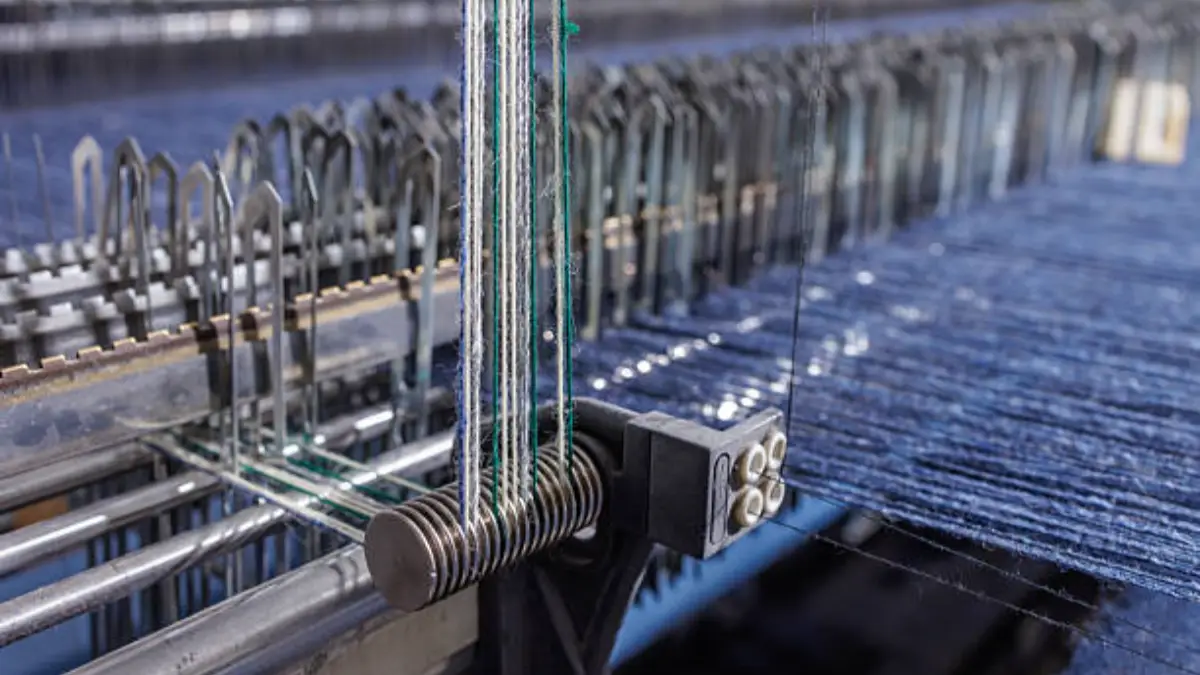
Textile mills and sewing facilities operate on different economic scales. While mills focus on loom efficiency, factories focus on labor and machine setup.
| MOQ Category | Typical Minimums | Primary Driver | Mieux pour |
|---|---|---|---|
| Tissu (Moulin) | 500 – 1,000 Meters | Loom efficiency & dye vats | Custom washes |
| Garment (Usine) | 50 – 100 Pieces | Pattern & calibration | Core styles |
| Denim durable | 100 – 200+ Pieces | Strict eco-mill rules | Eco-labels |
| Stock Fabrics | 30 – 50 Pieces | Pre-purchased rolls | Startup brands |
Trims and Accessories MOQ
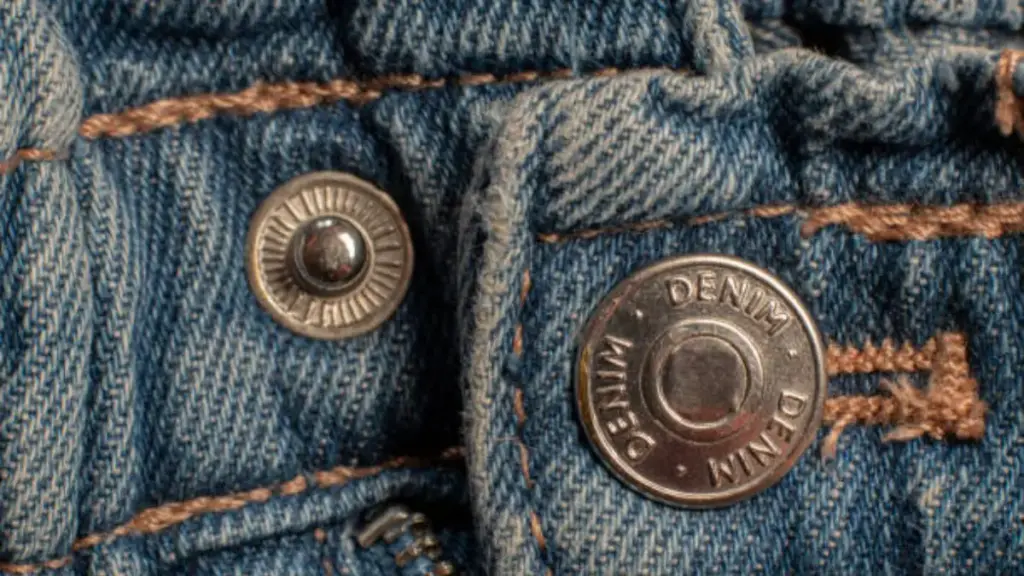
Hardware is the “hidden” MOQ. Custom-branded buttons, rivets, and zippers often require bulk orders that far exceed your garment count.
- Custom Hardware: Suppliers typically enforce 500 – 1,000 units for bespoke trims.
- Le “In-House” Hack: Use a factory’s pre-stocked (standard) trims to bypass hardware minimums entirely.
- Size vs. Style Flexibility: Most factories allow Size Mixing (Par exemple, 50 pieces across S-XL) within a single MOQ, but not Color Mixing, due to fabric dye lot constraints.
Complexity Surcharges
The more complex the construction, the higher the barrier to entry.
- Simple Styles: MOQ inférieurs; easier to scale.
- Technical Details: Features like fly-front zips or complex pocketing often push factory minimums to 100+ pieces to cover the extra labor training and machine adjustment time.
Why MOQ Affects Cost and Production Efficiency
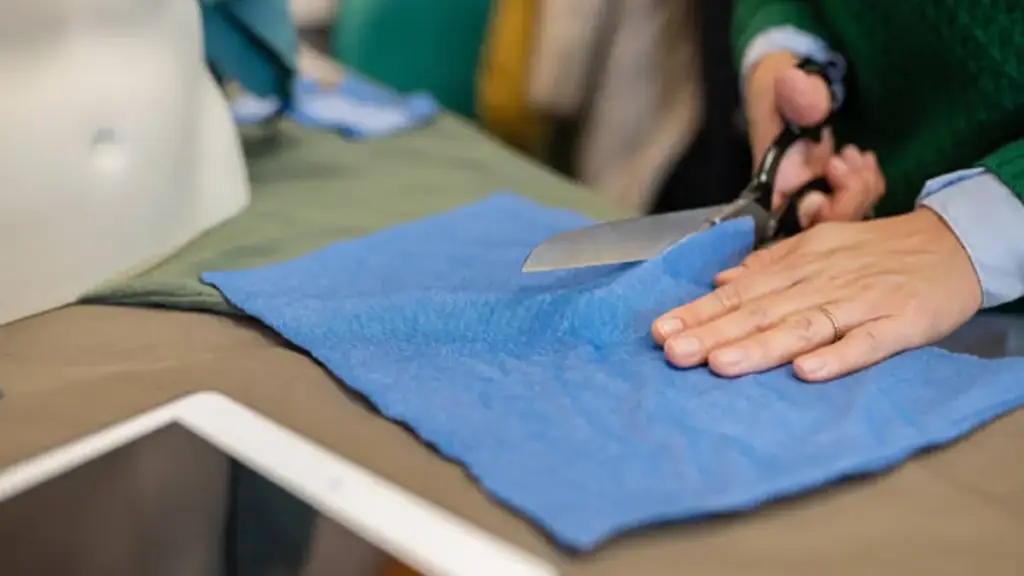
High MOQs are not arbitrary; they are the foundation of a sustainable denim fabric price breakdown. By spreading fixed costs across larger volumes, brands can transition from expensive sampling rates to profitable retail margins.
How Fixed Costs Dictate Pricing Models
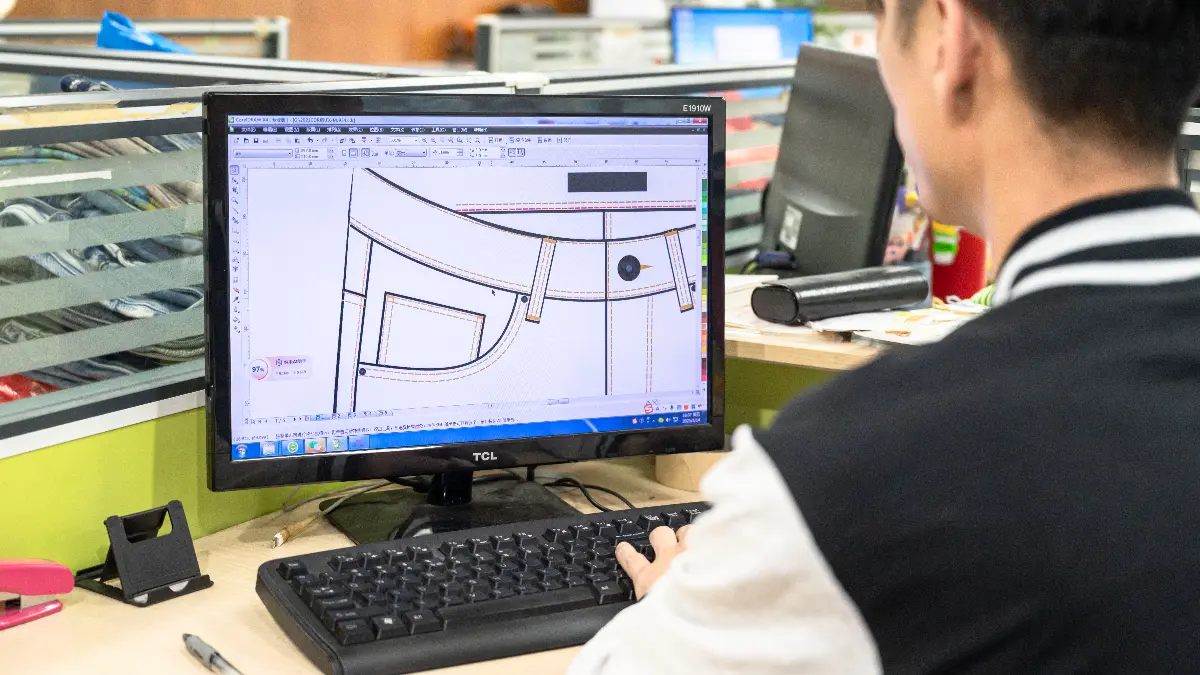
Whether producing 50 ou 5,000 unités, factory setup expenses—pattern digitizing, machine calibration, and labor prep—remain constant.
In small batches, a single garment absorbs a massive share of these costs. Once orders exceed 500 unités, these expenses are distributed across the run, significantly lowering the per-unit price.
Operational Gains and Waste Reduction in Denim Factories
Large volume runs drastically improve material utilization. Factory teams stack multiple fabric layers on the cutting table at once, minimizing waste and maximizing the yield from every roll of denim.
Sewing operators build speed through sheer repetition. Handing them a large batch of identical jeans allows them to establish a steady, fast workflow. Small batches force them to constantly switch styles, killing their momentum and slowing down the entire floor.
Running production lines at full capacity prevents idle machinery. It also minimizes the defect rates that happen when technicians constantly tweak and adjust machine setups for frequent, small run changeovers.
Élevez votre marque avec du denim personnalisé haut de gamme
How Small Brands Can Work with MOQ Requirements
Smart material strategy, simplified SKUs, and flexible factory partnerships help small denim brands bypass high minimums, protecting cash flow while maintaining premium quality.
| Factory Type | MOQ per Style | Estimated Cost per Pair |
|---|---|---|
| Boutique Workshop | 30 – 50 pièces | $35 – $60 |
| Mid-Size Factory | 100 – 200 pièces | $20 – $35 |
| Large Plant | 300 – 500+ pièces | $15 – $25 |
Optimize Fabric Sourcing Strategies
Fabric mills dictate the foundational rules of denim production. You bypass massive 500kg minimums by sourcing smarter materials right from the start.
- Select fabrics with lower supplier minimums, like premium selvedge denim at 500 à 1,000 mètres, to align with small production runs and avoid excess material costs.
- Prioritize mills offering small-batch dyeing and sustainable options for orders of 100 à 200 pièces, allowing you to mix sizes and colors easily.
- Negotiate sliding-scale pricing based on fabric weight and dye methods, or buy fabric in bulk to reduce garment minimums and cut per-unit expenses.
Work with Flexible and Low-MOQ Manufacturers
Finding the right production partner changes the entire financial math of your startup. Look past the massive overseas plants and focus on setups built for agility.
- Target boutique workshops for orders of 30 à 50 pieces at $35 à $60 par paire, or mid-size factories for 100 à 200 pieces at $20 à $35 par paire.
- Choose manufacturers fournir 100 pieces per style with mixed sizes, varied washes, and sample development specifically designed for startups.
- Build strong relationships through clear communication on design complexity and trims to negotiate lower minimums or secure future order commitments.
Simplify Product Line and SKU Strategy
Complexity kills low-volume runs. Every heavy wash or custom distressing technique requires unique setups that drive factories to demand higher unit counts.
- Limit your SKUs to basic washes or core styles to meet 50 à 100 piece minimums without triggering complexity-driven cost increases.
- Focus on 20 à 50 pieces per style for micro-drops and avoid heavy washes or complex rips that typically push minimum requirements to 200 pièces.
- Reduce variations in size ranges, couleurs, and hardware trims to streamline production and qualify for low-minimum manufacturing programs.
Optimize Order Allocation and Size Ratios
You do not need to order a flat block of identical sizes. Factories allow you to distribute your minimums across a targeted size run to match actual customer demand.
- Allocate orders across mixed sizes within a single 100-piece minimum to balance ratios, tel que 20% Petit, 30% Moyen, 30% Large, et 20% Extra Large, minimizing overall waste.
- Distribute small batches of 50 à 100 pieces for real-world trend testing, and scale only proven styles to larger production runs.
- Use on-demand models for 30-piece orders to match market demand directly, producing only the exact quantities required per size break.
Working with Factories Offering Low-MOQ Programs
Several modern factories now operate dedicated low-MOQ programs. These setups prioritize long-term brand growth over immediate bulk volume.
- Seek factories specializing in 50 à 100 pieces per design for custom OEM denim, giving startups room to iterate on customer feedback without massive initial investments.
- Opt for providers offering 30 à 50 pieces with full customization options, custom brand packaging, and flexible sourcing to maintain premium quality.
- Negotiate specific terms like pre-buying your trims or committing to repeat orders to access highly restricted programs starting at 100 pièces.
MOQ and Pricing: What Changes at Different Volumes
Production volume creates a direct trade-off between per-unit cost and capital risk. Mastering these variables directly controls your custom jeans cost and protects your long-term profit margins.
How Volume Shapes Cost Structures
- Bulk Efficiency: Large runs (500+ unités) allow factories to spread fixed costs—such as machine calibration and pattern grading—across more pieces, significantly dropping the price per pair.
- Strategic Small Batches: While low-volume orders carry a higher unit price, they minimize total capital outlay. This preserves cash flow and prevents the “dead inventory” trap common in unproven styles.
The Technical Drivers of MOQ
Minimums are dictated by technical limitations rather than arbitrary rules:
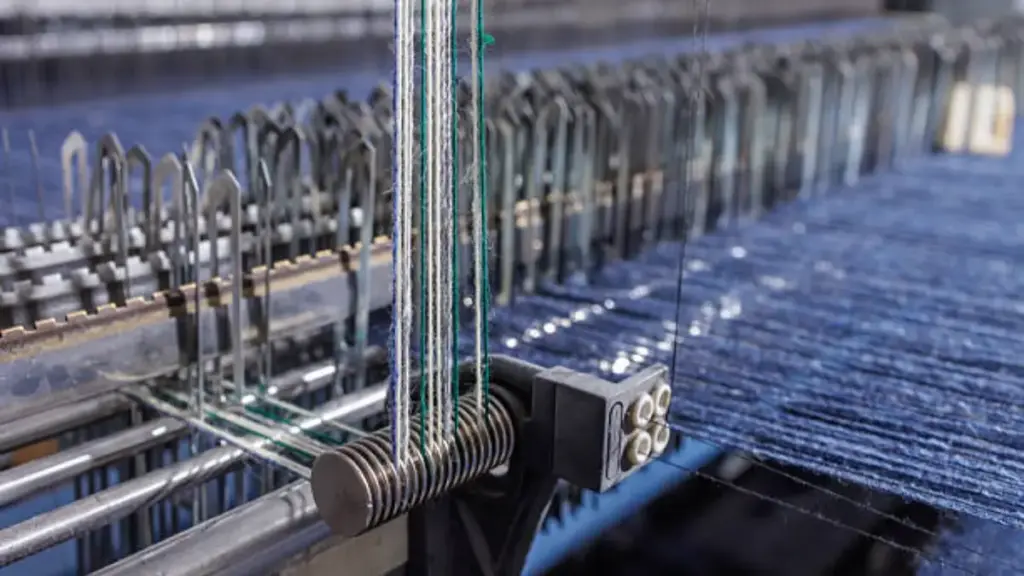
- Fabric Integrity: To ensure consistent dye lots, mills require at least one full roll per color. Using specialty types of denim fabric (like selvedge or organic) often triggers higher minimums due to limited loom availability.
- Complexité de production: Basic designs allow for lower entry points. Inversement, specialized washes, heavy distressing, or custom hardware require larger batches to justify the complex technical setup.
- The Single-Color Rule: While factories offer flexibility in sizing (Par exemple, splitting 100 pieces across S–XL), MOQs apply strictly per colorway. You cannot split a single fabric minimum across multiple dye lots.
Scaling from Small Orders to Bulk Production
Scaling from test runs to bulk production cuts per-unit costs and optimizes factory setups, but requires smart shifts in sourcing and forecasting to protect margins.
Phased Transition to High-Volume Manufacturing
Moving from initial concepts to mass fabrication requires a calculated approach to mitigate risk. You validate the market first, then push for volume efficiency.
- Test Phase (25 à 300 pièces): Run small batches to refine the fit, finalize wash details, and confirm actual market demand before tying up significant capital.
- Growth Phase (500 à 1,000 pièces): Consolidate your styles and use a consistent reorder history to negotiate better production terms with the factory.
- Production en vrac (1,000+ pièces): Reach this volume to help factories optimize machine setups. This lowers your per-unit costs and shrinks overage allowances down to a maximum of 10 pour cent.
Operational Adjustments for Higher Quantities
High-volume runs demand stricter control over your supply chain. You must upgrade your material sourcing and factory relationships to handle the scale.
- Shift Material Sourcing: Move away from leftover deadstock and partner with dedicated mills. This guarantees consistent shade matching and finishing across large production runs.
- Secure Priority Slots: Build a reliable track record of consistent orders to lock in prime factory schedules and accelerate turnaround times for your best-sellers.
- Analyze Sell-Through Metrics: Pull exact sales data and size breakdowns from your initial small batches to accurately forecast demand and eliminate overstock waste.
Pensées finales
Prioritizing the lowest unit price on day one often leads to “dead inventory” traps. Successful denim brands scale safely by balancing simplified SKUs with flexible factory partnerships. This strategic approach protects your cash flow and prevents operational burnout.
Stop guessing your manufacturing limits. Changhong specializes in bridging the gap between boutique agility and bulk efficiency. We recommend booking a production consultation to align your vision with a low-risk roadmap. Contact the Changhong sourcing team today to secure your pilot run and master your long-term scaling strategy.
Foire aux questions
What is the standard MOQ for custom jeans?
Standard MOQs range from 30 à 500 pièces par style. Boutique workshops typically require 30–200 units, while large-scale Asian plants expect 300–1,000+. Complexity, organic fabrics, and custom hardware significantly increase these baseline requirements.
Can I get custom jeans with a low MOQ?
Oui. Many specialized manufacturers offer MOQs as low as 50 pieces if you use in-stock fabrics and standard patterns. While this reduces inventory risk and upfront investment, expect a higher per-unit cost compared to bulk production.
Why do factories have MOQs for denim?
MOQs cover high setup costs like machine calibration and pattern making. En jean, mills also require minimum volumes to ensure dye consistency and stable shrinkage, which are impossible to control in ultra-small fabric batches.
How do I negotiate MOQs with an apparel manufacturer?
Offer a higher per-unit price to offset their setup losses or suggest a pilot order for market testing. Using standard indigo dyes, in-stock fabrics, and generic hardware also makes factories more likely to lower their entry barriers.
Does MOQ include different sizes or just one?
MOQs apply to the total volume per style and colorway. Most factories allow you to split the minimum (Par exemple, 100 pièces) across a standard size run (S–XL), but you cannot mix different colors or silhouettes.
What happens if I can’t meet the fabric MOQ?
If you miss the mill’s minimum, you must either pay a surcharge for fabric waste or switch to deadstock/in-house materials. Standardizing one fabric across multiple styles is the best way to hit these bulk thresholds.