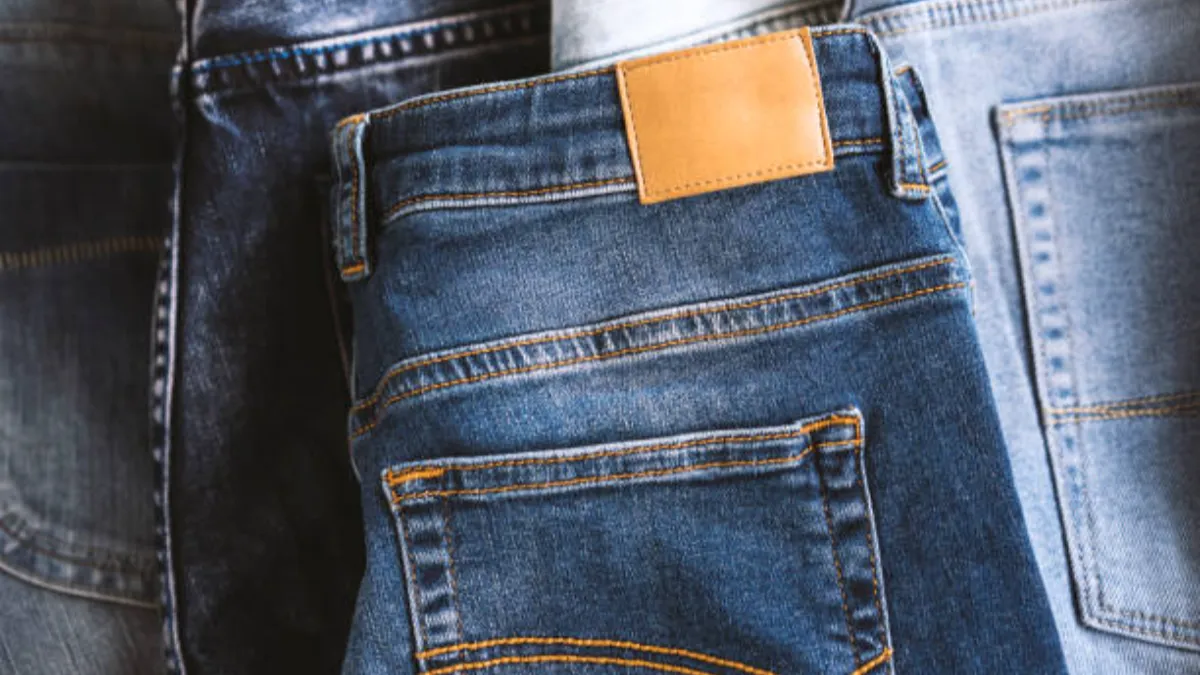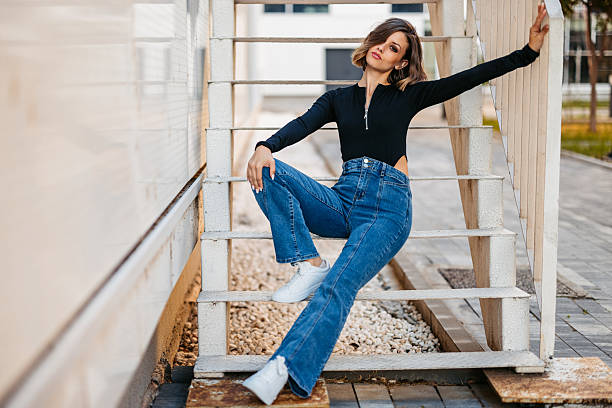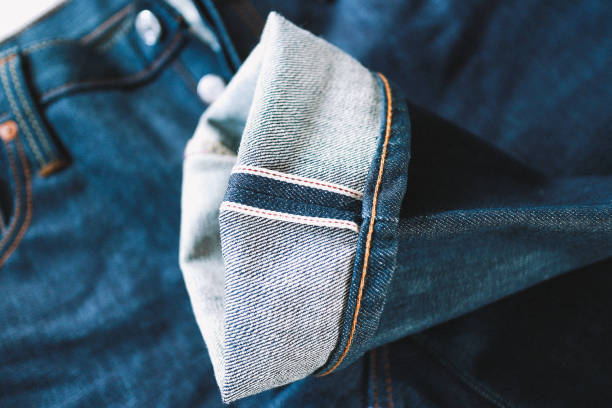
El lavado y acabado de la mezclilla son fundamentales para definir el look., sentir, y rendimiento de los jeans. Marcas, diseñadores, y todos los compradores confían en comprender las diferencias entre el proceso húmedo de la mezclilla y el proceso seco de la mezclilla para crear productos consistentes., productos de alta calidad.
Esta completa guía de lavado de mezclilla cubre los tipos, principios, efectos visuales, y aspectos de sostenibilidad de los procesos húmedos y secos. La guía también proporciona información práctica para abastecerse de fabricantes confiables de mezclilla., garantizar que su colección cumpla con las expectativas del mercado.
¿Qué son los procesos húmedos y secos de mezclilla?
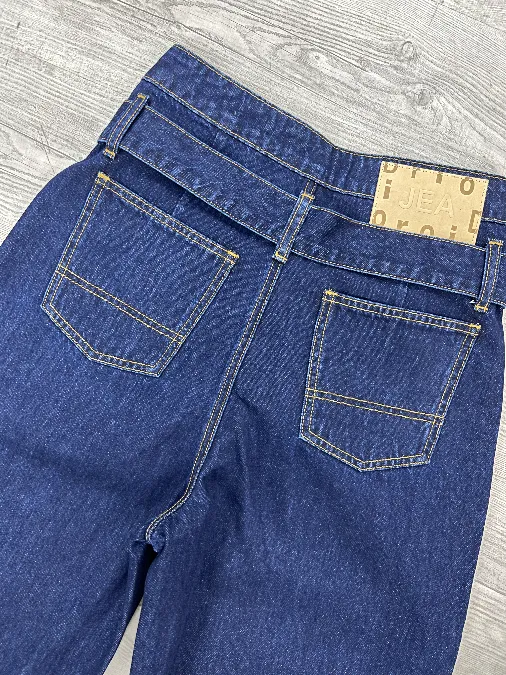
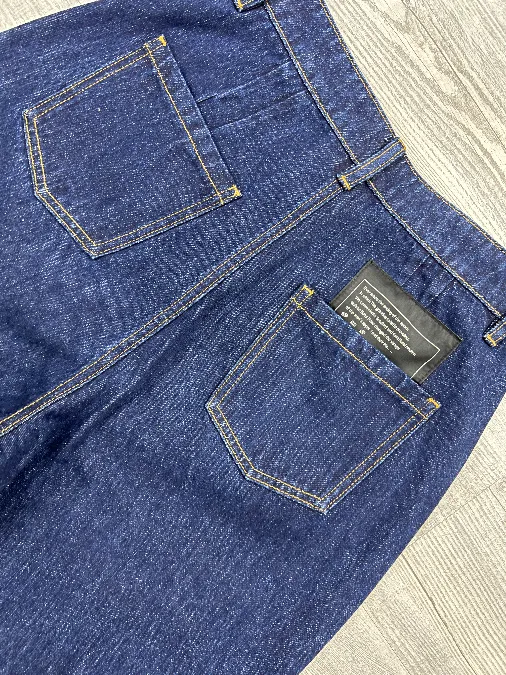
El acabado de la mezclilla se puede clasificar en términos generales en dos etapas principales.: procesamiento húmedo y procesamiento seco. Ambos tienen funciones distintas para lograr la calidad deseada de la prenda..
Proceso húmedo de mezclilla
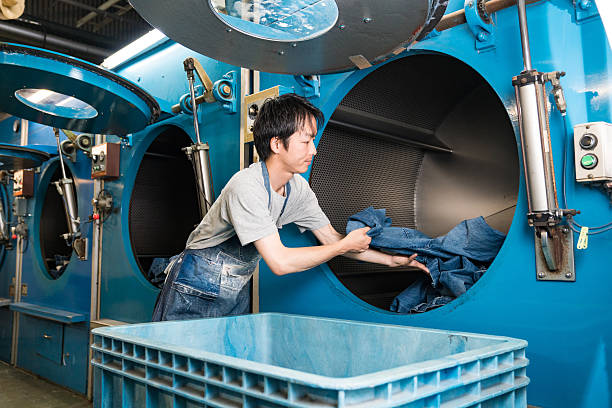
El proceso húmedo de la mezclilla implica el uso de agua., químicos, enzimas, o acción mecánica para manipular la estructura del tejido., color, y sentir la mano. Generalmente se lleva a cabo después de coser la prenda y es esencial para:
- Decoloración del color y ajuste de tono.
- Suavidad de la tela
- Estabilidad dimensional y control de contracción.
- Preparar la prenda para posteriores procesos de acabado.
Proceso de secado de mezclilla
El proceso de secado del denim se centra en los efectos visuales y superficiales aplicados después del lavado en húmedo.. Las técnicas incluyen abrasión., arrugando, acabado láser, y aplicación de resina. El procesamiento en seco no altera la estructura fundamental del tejido, pero mejora el atractivo estético de la prenda mediante la creación de patrones., bigotes, o texturas desgastadas.
Tabla comparativa: Proceso húmedo versus seco
| Característica | Proceso húmedo de mezclilla | Proceso de secado de mezclilla |
|---|---|---|
| Objetivo | Ajustar la estructura de la tela, color, y suavidad | Crea efectos visuales y patrones de textura. |
| Método | Agua, químicos, enzimas, acción mecánica | Abrasión manual/manual, láser, resina, herramientas mecanicas |
| Escenario | post-costura, preacabado | Después del lavado y secado en húmedo. |
| Impacto visual | Desvanecimiento uniforme del color, mano suavizada | Arrugas, bigotes, bordes desgastados, texturas en relieve |
| Impacto en la tela | Cambia las propiedades de la fibra., pérdida potencial de fuerza | Impacto mínimo en la resistencia del tejido. |
| Técnicas comunes | Lavado a la piedra, lavado de enzimas, lavado con lejía, enjuagar & limpio | Bigotes, molienda, raspado a mano, socorro láser, arruga de resina |
Descripción general de los tipos de procesos húmedos de mezclilla
| Proceso | Principio | Efecto visual | Consideraciones clave |
|---|---|---|---|
| Lavado de piedra | Cayendo con piedra pómez | Aspecto vintage suave con reflejos descoloridos. | Puede debilitar la tela, variabilidad de lotes, mayor uso de agua |
| Lavado en la enzima | Uso de enzimas celulasas. | Liso, desvanecimiento controlado | Más ecológico que las piedras, necesita un control preciso |
| Lavado ácido | Piedras con químicos oxidantes. | Contraste dramático, color alto-bajo | Riesgo de daño a la tela, Se requiere manejo de químicos |
| Luz / Medio / Lavado oscuro | Duración y fuerza química. | Tono general de claro a oscuro | Equilibra el color y la suavidad., requiere control de calidad |
| Blanqueador | Agente oxidante químico | muy pálido, aspecto desgastado | Alto riesgo de que la fibra se debilite y amarillee |
| Enjuagar & Limpio | Enjuague con agua simple | Casi crudo, desvanecimiento mínimo | Preserva la resistencia de la tela, cambio visual mínimo |
| sobreteñir / Tinte | Aplicación de tinte post-lavado | Tonos personalizados únicos | Agrega flexibilidad pero aumenta la complejidad del proceso |
Principales tipos de procesos húmedos de mezclilla
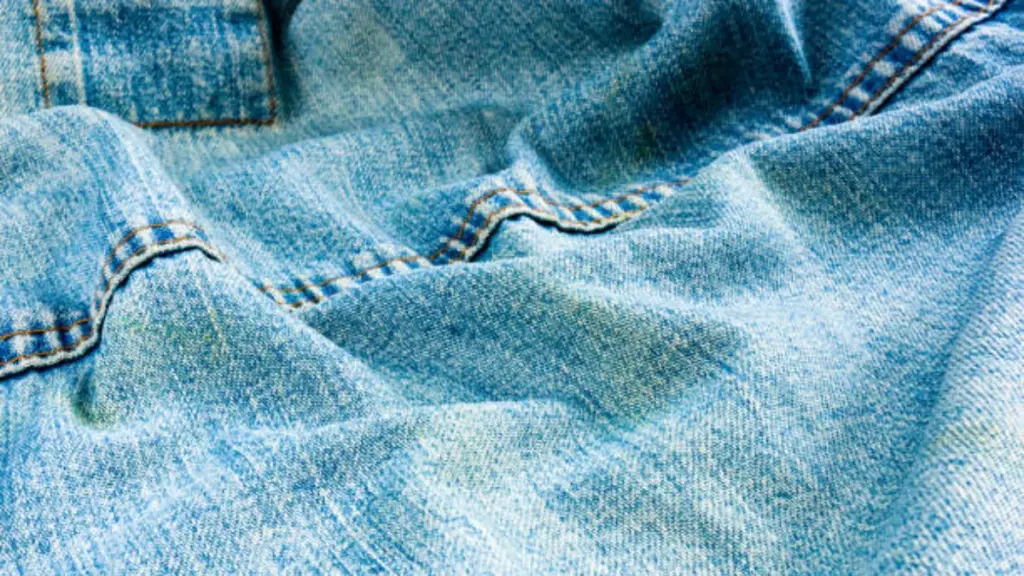
Lavado de piedra
El lavado a la piedra es un proceso tradicional de mezclilla en húmedo en el que las prendas se centrifugan con piedras pómez.. La fricción desgasta las fibras superficiales teñidas de índigo., produciendo un desgastado, aspecto antiguo. Este proceso suaviza la mezclilla y reduce la rigidez., dando una sensación cómoda en la mano. La intensidad del lavado se puede controlar según el tamaño y la cantidad de piedras., tiempo de caída, y velocidad de rotación mecánica, permitiendo variaciones desde un ligero desvanecimiento hasta fuertes efectos vintage.
| Ventajas | Contras |
|---|---|
| Crea naturales, desvanecimiento suave | Puede debilitar las fibras de la tela. |
| Mejora la comodidad de la prenda | Posibilidad de variación entre lotes |
Lavado en la enzima
El lavado enzimático utiliza enzimas celulasas para descomponer selectivamente las fibras de algodón en la superficie de la mezclilla.. Esta reacción bioquímica controlada elimina el índigo y crea patrones de decoloración suaves mientras mantiene la resistencia de la tela.. El proceso es más consistente que el lavado con piedra y se puede gestionar con precisión mediante la concentración de enzimas., temperatura, y duración. A menudo se prefiere que la mezclilla de primera calidad logre una decoloración reproducible sin una abrasión mecánica significativa..
| Ventajas | Contras |
|---|---|
| Liso, desvanecimiento uniforme | Requiere un control preciso de la actividad enzimática. |
| Menos daño a la fibra que el lavado a la piedra. | Costo de procesamiento ligeramente mayor |
Lavado ácido
El lavado ácido combina piedras pómez y productos químicos oxidantes para eliminar el índigo y producir una decoloración de alto contraste.. La reacción química entre el oxidante y el índigo crea áreas irregulares de luz y oscuridad., dándole a la mezclilla un aspecto dramático, aspecto retro. Parámetros del proceso como la concentración química., tiempo de exposición, y el movimiento de las piedras se controlan cuidadosamente para lograr efectos visuales consistentes y al mismo tiempo minimizar el daño a la tela..
| Ventajas | Contras |
|---|---|
| Efecto distintivo de alto contraste | Riesgo de debilitamiento del tejido |
| Impulsado por tendencias, visualmente impactante | Requiere un manejo químico cuidadoso |
Luz / Medio / Lavado oscuro
Estos lavados ajustan la profundidad de la decoloración controlando la fuerza química., duración del lavado, y agitación. Lavados ligeros producir suave, mezclilla descolorida, Los lavados medios equilibran el color y la sensación al tacto., y los lavados oscuros retienen el índigo más profundo con una decoloración mínima. Este proceso permite a las marcas ofrecer diversas gamas de estilos, desde denim claro vintage hasta denim oscuro de primera calidad., manteniendo al mismo tiempo una calidad constante de la prenda mediante un cuidadoso control de calidad..
| Ventajas | Contras |
|---|---|
| Gama versátil de tonos. | Requiere un control de calidad preciso para mantener la coherencia |
| Equilibra el color y la suavidad. | Mayor tiempo de procesamiento para lograr uniformidad |
Blanqueador
El lavado con lejía aplica oxidantes químicos para quitarle color a la mezclilla, creando tonos muy claros y estética desgastada. la concentracion, exposición, y el enjuague se controlan cuidadosamente para evitar daños excesivos. Es ideal para los vanguardistas., Estilos de mezclilla pálidos, pero deben controlarse para mantener la integridad de la tela..
| Ventajas | Contras |
|---|---|
| Crea dramático, mezclilla pálida | Alto riesgo de debilitamiento de la fibra. |
| Popular para diseños basados en tendencias. | Puede causar coloración amarillenta si no se controla. |
Enjuagar & Limpio
Enjuagar & La limpieza es un proceso húmedo mínimo para eliminar el almidón., apresto, e impurezas de la superficie sin afectar significativamente el color. Esto preserva la estética del denim casi crudo y mantiene la resistencia del tejido., proporcionando una limpieza, sensación natural en la mano.
| Ventajas | Contras |
|---|---|
| Preserva la resistencia de la tela | Efecto estético limitado |
| Mantiene una apariencia casi cruda | No apto para decoloración intensa |
sobreteñir / Lavado de tinte
El lavado con tinte o tinte aplica pigmentos adicionales después del lavado base para crear tonos únicos de temporada.. Este método permite la creatividad., Colores personalizados y diseños de moda manteniendo la calidad de la tela..
| Ventajas | Contras |
|---|---|
| Opciones de color flexibles | Requiere un control preciso para la coherencia. |
| Mejora el atractivo de la moda. | Agrega complejidad y costo al proceso |
Descripción general de los tipos de procesos de secado de mezclilla
| Proceso | Categoría | Principio | Efecto visual | Método |
|---|---|---|---|---|
| raspado de mano / Lijado a mano | Abrasión manual | Papel de lija aplicado a mano sobre jeans. | Desvanecimiento natural con profundidad en capas. | Trabajadores calificados raspan manualmente áreas como los muslos., rodillas, bolsillos |
| Lavado de mono / Pulverización de PP | Abrasión manual | Solución con alto contenido de manganeso rociada en las áreas objetivo. | Más brillante, desvanecimiento más rápido | Combina reacción química con orientación manual. |
| Chorro de arena | Abrasión manual | Pistola de aire de alta presión con abrasivos | Escabroso, aspecto muy desgastado | Reemplazado en gran medida por el láser debido a riesgos para la salud |
| Bigotes / Bigote | 3Textura D | Patrones de pliegues en caderas y muslos. | Pliegues naturales y líneas de desvanecimiento. | Modelado manual o láser |
| Molienda / destruido | 3Textura D | Abrasión en bordes y costuras. | agujeros, raedura, bordes desgastados | Rectificado a máquina o manual |
| Resina / 3D arrugado | 3Textura D | Aplicación de resina y ajuste de alta temperatura. | Pliegues permanentes con profundidad táctil. | Pulverización de resina y termofijación. |
| teñido anudado / Etiquetado | Patrones | Atar o suspender prendas | Patrones de abrasión o tinte localizados personalizados | Manipulación manual y acabado químico. |
Tipos comunes de procesos de secado de mezclilla
Manual / Abrasión Mecánica
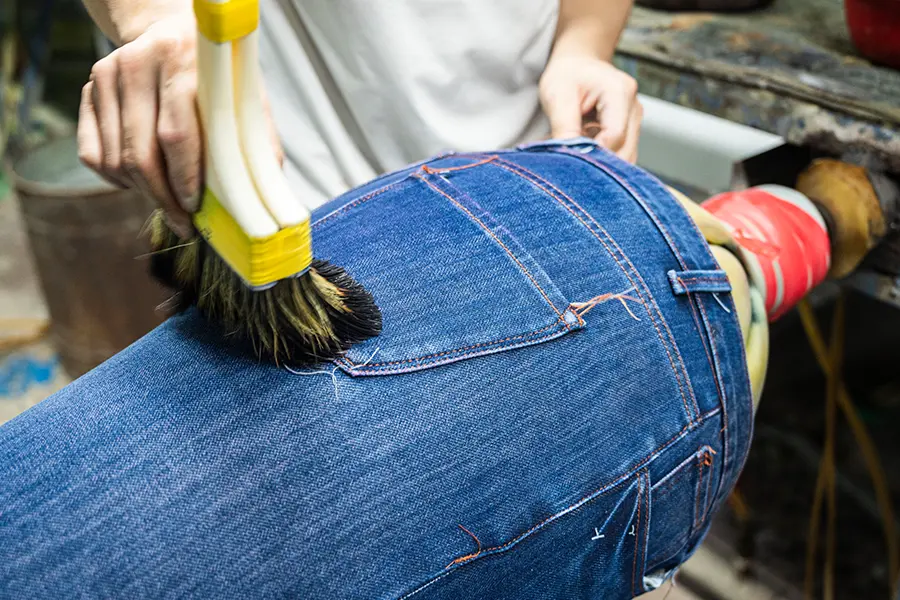
- raspado de mano / Lijado a mano: Los trabajadores usan papel de lija para raspar manualmente áreas como muslos y caderas., creando un desvanecimiento natural con profundidad en capas. Esta técnica premium enfatiza un desgaste, aspecto antiguo. La mano de obra calificada es esencial para la coherencia, asegurando patrones de desgaste realistas y una sensación suave al tacto..
- Lavado de mono / Pulverización de PP: Se rocía una solución con alto contenido de manganeso en las áreas específicas., produciendo brillante, desvanecimiento rápido. A menudo se combina con raspado manual., Este método acelera la producción y al mismo tiempo logra efectos de iluminación controlados..
- Chorro de arena: Se aplica aire a alta presión mezclado con material abrasivo a la tela., produciendo un resistente, aspecto muy desgastado. Debido a riesgos para la salud como la silicosis., muchas marcas han prohibido este método, con láseres reemplazándolo gradualmente por seguridad y precisión..
3Textura D & Destrucción
- Bigotes / Bigote: Crea patrones de pliegues en caderas y muslos., simulando pliegues naturales debido al uso prolongado. Se puede aplicar manualmente o con láser para lograr una textura y profundidad realistas en 3D..
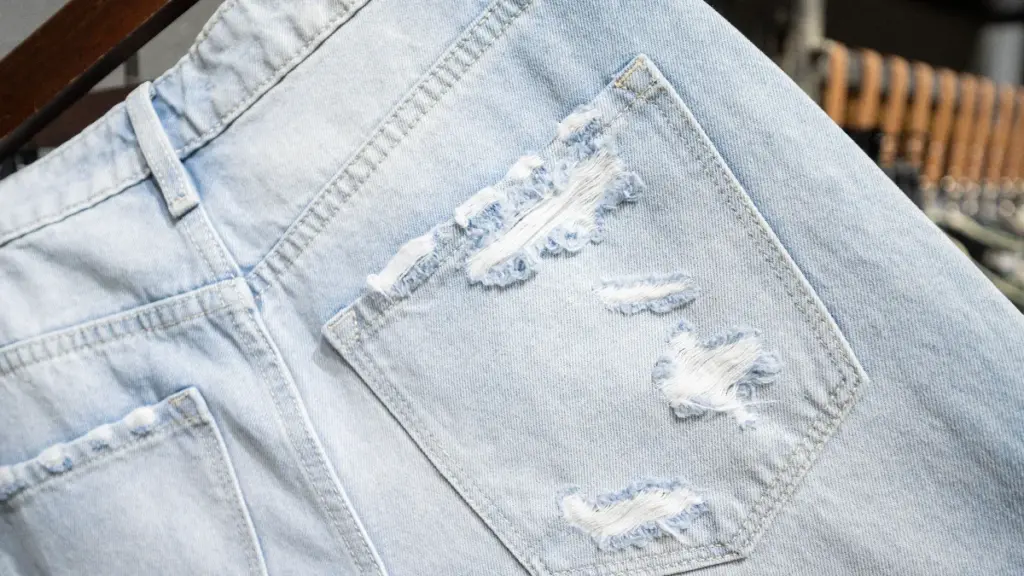
- Molienda / destruido: Las máquinas o herramientas manuales desgastan los bordes y las uniones., formando agujeros, deshilachados, y áreas desgastadas. Popular en estilos streetwear, agrega una apariencia intencionalmente angustiada.
- Resina / 3D arrugado: La resina se aplica a las áreas específicas y se fija con calor para formar pliegues 3D permanentes.. Mejora tanto la profundidad visual como la textura táctil., creando características de diseño duraderas.
- teñido anudado / Etiquetado: Las prendas se atan o suspenden y se tratan con abrasión o tinte para producir patrones localizados.. Agrega personalización y efectos artísticos para un estilo único., mezclilla visualmente atractiva.
Denim personalizado que da vida a tu marca
La revolución sostenible en el procesamiento de mezclilla
El elefante en la habitación con respecto al procesamiento de mezclilla es su impacto ambiental. Tradicionalmente, La industria ha consumido mucha agua y dependía de productos químicos.. Sin embargo, se está produciendo un cambio tecnológico masivo, pasando de “arte a través de productos químicos” a “Arte a través de la tecnología.”
1. Acabado láser
La tecnología láser está sustituyendo al lijado manual, bigotes, y destrucción.
- El beneficio: Un láser puede grabar un patrón vintage en un par de jeans en 90 artículos de segunda clase, un proceso que requiere un ser humano 10-15 minutos. Elimina el polvo del lijado y reduce significativamente la intensidad de mano de obra..
2. Lavado de ozono
Ozono (O3) Se utiliza gas para blanquear la mezclilla sin agua..
- El beneficio: El ozono ataca la molécula de índigo y luego se convierte nuevamente en oxígeno ordinario.. Puede quitar el color y limpiar. “tinción posterior” (bolsillos sucios) con cero descarga de agua y cero residuos químicos.
3. Nanoburbuja (flujo electrónico) Tecnología
En lugar de llenar una lavadora con miles de litros de agua, esta tecnología crea una “niebla” de nanoburbujas que contienen suavizantes químicos o resinas.
- El beneficio: Permite la aplicación de productos químicos utilizando una mínima cantidad de agua. (reduciendo el consumo de agua hasta en 95%) y garantiza cero residuos químicos.
4. Piedras artificiales
Para reemplazar la piedra pómez (que extraen recursos naturales y crean lodos), La industria está avanzando hacia piedras ecológicas abrasivas sintéticas o esferas de polímeros reutilizables que desgastan la mezclilla sin desintegrarse..
Elegir el proceso húmedo y seco adecuado para su línea de mezclilla
Seleccionar la combinación correcta de procesos húmedos y secos es una decisión estratégica que afecta directamente la calidad del producto., costo, escalabilidad, y aceptación del mercado. Al evaluar las opciones de acabado., Las marcas deben centrarse en los siguientes factores clave.:
- Mercado objetivo y posicionamiento
De primera calidad, La mezclilla de moda a menudo requiere lavados enzimáticos controlados y procesos de secado detallados como bigotes o arrugas de resina., mientras que los estilos del mercado masivo priorizan la eficiencia y la durabilidad.. - Resultado visual deseado
El aspecto final importa. Uniforme, Los desvanecimientos limpios dependen más de procesos húmedos., mientras que la vendimia, desgastado, o estilos desgastados dependen en gran medida de técnicas secas. - Tipo de tela y construcción
La mezclilla más pesada tolera mejor el lavado agresivo y la abrasión que las telas livianas o elásticas., que requieren más gentil, procesos más controlados. - Escala de costos y producción
Las combinaciones de procesos complejos aumentan el costo unitario y el tiempo de entrega.. Las marcas deben equilibrar los objetivos estéticos con la viabilidad comercial. - Control de consistencia y calidad
Algunos procesos, especialmente técnicas manuales en seco, Requieren mano de obra calificada para garantizar resultados repetibles en toda la producción a granel.. - Sostenibilidad y Cumplimiento
Uso de agua, impacto químico, y la seguridad de los trabajadores son cada vez más importantes. Lavados enzimáticos, acabado láser, y las tecnologías de ozono ayudan a las marcas a cumplir con las expectativas ambientales y regulatorias.
Pensamientos finales
Es esencial dominar el intrincado equilibrio de los procesos húmedos y secos del denim., pero tener la infraestructura adecuada es lo que convierte ese conocimiento en ganancias.. A medida que el mercado exige estándares de sostenibilidad más altos y tiempos de respuesta más rápidos, confiar en métodos obsoletos ya no es una opción. Tu maquinaria debe ser tan avanzada como tus técnicas..
En Changhong, Proporcionamos las soluciones de lavado y teñido industrial necesarias para seguir siendo competitivos en este panorama en evolución.. Ya sea que esté actualizando una sola máquina o planificando una revisión completa de sus instalaciones, Nuestros expertos están aquí para ayudarle a optimizar la eficiencia y la calidad..
Listo para mejorar su línea de producción de mezclilla? Contáctenos hoy para una consulta profesional, o explore nuestra gama completa de maquinaria de acabado textil para encontrar la solución perfecta para su negocio.