Raw denim vs washed denim affects more than the appearance and feel of a finished garment. لماركات الملابس, the fabric choice also influences finishing expenses, production schedules, and quality control requirements. A clear view of these factors helps brands estimate costs more accurately, plan product launches, and avoid unexpected adjustments during bulk production.
This guide explains how each denim type affects manufacturing costs, processing time, and product development. It also examines how fabric characteristics and finishing requirements align with different market positions and customer expectations, helping apparel brands build production plans that balance product design, budget, and delivery targets.
Raw Denim vs Washed Denim: Understanding the Key Difference
Raw denim retains its original texture and develops natural fades, while washed denim offers a softer feel and consistent appearance from day one.
| Comparison Factor | الدنيم الخام | الدينيم المغسول |
|---|---|---|
| Fabric Treatment | No garment washing or finishing treatments | Pre-washed using processes such as enzyme or stone washing |
| نَسِيج | Stiff and firm at first | Softer and more flexible |
| لون | عميق, uniform indigo tone | Varies depending on the washing process |
| انكماش | May shrink after the first wash | Often pre-shrunk, depending on the process |
| Fading Effect | Develops natural fades through repeated wear | Fades and distressing are created during manufacturing |
| راحة | Requires a break-in period | Comfortable from the first wear |
| رعاية | Requires attention to washing and shrinkage | Generally easier to maintain |
الدنيم الخام: The Unprocessed Foundation
Without garment washing or distressing treatments, the fabric retains its original character and firm texture. Repeated wear gradually softens the material, while friction creates individual fading patterns around the knees, الفخذين, and pockets. These natural variations give each garment a distinctive appearance, appealing to brands targeting denim enthusiasts and customers who value personalized aging effects.
الدينيم المغسول: Comfort From Day One
Factory-applied treatments give the fabric greater flexibility in color, نَسِيج, and surface appearance. Techniques such as stone washing, غسل الإنزيم, and acid washing create different levels of softness and fading. Manufacturers can also adjust washing intensity to achieve specific finishes across production batches, making this option suitable for brands that prioritize immediate comfort and consistent product styling.

ما هو الدنيم الخام?
Raw denim preserves its original fabric character without garment washing, allowing brands to develop jeans with natural fading and distinctive wear patterns.
A Pure, Unwashed Canvas
Raw denim keeps its original surface and color after weaving and dyeing, without the garment washing or distressing treatments commonly applied to finished jeans. Its firm texture and deep indigo shade give the fabric a clean, structured appearance. The final look also depends on the denim’s weight, نسج, and dyeing method, which influence its surface texture and overall feel.
Its original surface gradually responds to friction and movement, giving the fabric a different appearance as the garment ages.
How It Develops Character Through Wear
The fading process in raw denim depends on several factors. Indigo dye mainly colors the outer surface of cotton yarns, allowing repeated friction to gradually reveal lighter areas underneath. The following factors influence how these fading patterns develop:
- Fabric Weight and Construction: Heavier denim often creates a more structured appearance, while yarn construction affects how the fabric responds to repeated wear.
- Indigo Dye Depth: Deeper dye shades can create stronger contrasts as the outer color gradually wears away.
- Wearing Habits: Daily movement, friction, and garment fit influence where creases and fading patterns appear.
- Washing Frequency: Washing can change the speed and appearance of fading, depending on the washing method and fabric characteristics.
لماركات الملابس, these characteristics offer more ways to develop distinctive denim collections. Different fabric weights, indigo shades, and yarn constructions can support products ranging from structured heritage jeans to more relaxed everyday styles. Brands can use these details to create a recognizable denim identity and appeal to customers who value natural aging effects.
Develop Custom Raw and Washed Denim Collections
What Is Washed Denim?
Industrial washing and finishing shape denim’s texture, لون, and surface effects to meet different design and production requirements.
From Raw Fabric to Finished Garment
Washed denim refers to denim garments that undergo industrial washing and finishing after sewing. Manufacturers use these processes to change the fabric’s texture, adjust its color, reduce residual shrinkage, and create specific surface effects. The final result depends on the combination of treatments, washing intensity, and fabric characteristics.
Different washing combinations produce different results, giving brands more flexibility in denim design. على سبيل المثال, a light rinse can soften dark indigo jeans while preserving most of their original color. Combining stone washing with additional finishing treatments can create a more faded, مظهر خمر. Manufacturers adjust these processes according to the desired finish, fabric properties, and product specifications.
Industrial Washing and Finishing Processes
Denim manufacturers select washing methods based on the required color, نَسِيج, and level of distressing. Each process creates a different effect and may involve specific production and quality control requirements.
Washing Methods
- شطف غسل: Uses water and sometimes a mild softener to remove loose dye and surface residues. It gives denim a slightly softer feel while keeping most of its original dark color.
- غسل الحجر: Uses pumice stones or other abrasive materials during washing to create surface fading and a worn-in texture. The level of abrasion affects both the final appearance and fabric strength.
- غسل الانزيم: Uses cellulase enzymes to act on the cotton fiber surface and help release indigo-bearing fibers. This creates a softer feel and more natural fading with less mechanical abrasion than traditional stone washing.
- غسل التبييض: Uses bleaching agents to lighten the indigo color and create pale blue or vintage effects. Manufacturers must control the chemical concentration and processing time to protect fabric strength.
Additional Finishing Techniques
Beyond washing, manufacturers can apply additional finishing and distressing techniques to create more detailed designs:
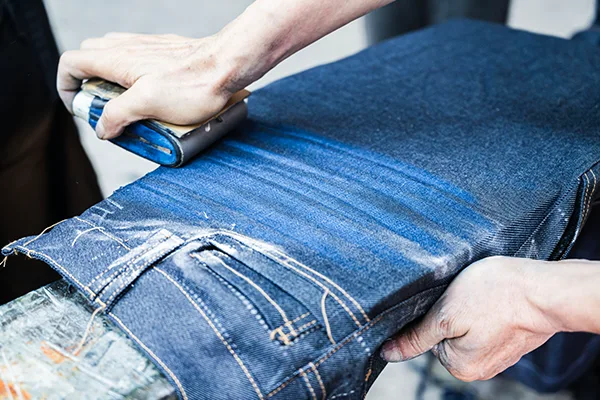
- الصنفرة اليدوية: Uses abrasive tools to create localized fading on areas such as the thighs, الركبتين, وحواف الجيب.
- التشطيب بالليزر: Uses laser equipment to create precise patterns, شعيرات, and faded effects without relying on manual sanding.
- Ozone Treatment: Uses ozone to reduce indigo color and create lighter finishes, potentially lowering water and chemical use compared with some traditional bleaching methods.
لماركات الملابس, combining different washing and finishing methods provides greater control over the final product. The choice of process should match the desired design, قوة النسيج, target price, ومتطلبات الإنتاج. Sample approval and wash testing also help manufacturers maintain consistent results across bulk orders.rs maintain consistent results across bulk orders.

How Raw and Washed Denim Affect Production Costs
Raw denim lowers production costs and speeds up time-to-market by skipping the expensive, resource-intensive garment washing stage required for washed jeans.
Fabric Cost and Processing Expenses
The cost difference starts at the fabric mill. Raw denim fabric typically has a lower upfront cost because it skips mill-level washing and finishing steps, which add significant expense to pre-washed fabrics. Once the jeans are assembled, the financial gap widens.
- For finished garments, washing adds a direct cost of $0.50 لأكثر من $3 لكل زوج for standard washes. معقد, multi-step distressing can push that cost up to $12 لكل وحدة.
- Washed denim production also incurs extra costs for water, المواد الكيميائية, والطاقة. On top of that, you have to pay for wastewater treatment—an expense that raw denim production completely avoids.
Machinery, Labor and Washing Requirements
Opting for raw denim simplifies the entire operation. It relies on standard cutting and sewing equipment, letting a brand sidestep major capital investment in specialized machinery. Washed denim production is a different beast.
- It requires expensive industrial washers, dryers, and often laser machines for modern distressing effects.
- The process also demands specialized labor, like wash technicians and artisans for any hand-distressing, which directly increases the per-unit labor cost.
- By eliminating the entire garment washing stage, raw denim production simplifies factory management, reducing both overhead and operational complexity.
Production Timeline and Time-to-Market Impact
Producing raw denim shortens factory lead time by a solid 4 ل 10 أيام compared to washed denim. You bypass the long cycles of washing, drying, and the back-and-forth of wash approvals. This speed gives a brand a real competitive advantage.
A faster time-to-market reduces work-in-process inventory and allows brands to respond to demand more quickly, without being tied to a wash house’s schedule. The longer lead times for washed denim increase forecasting risk, as you have to commit to production much earlier to secure that finishing capacity.
How Quality Control Requirements Differ Between Raw and Washed Denim
QC for raw denim is about predicting future changes before production. For washed denim, it’s about verifying the finished product matches the approved standard after production.
Shrinkage and Size Accuracy Control
For raw denim, the entire game is predictive. Since the fabric is unwashed, QC’s job is to test for shrinkage *before* any garments are assembled. Patterns are then adjusted based on how much a fabric lot is expected to shrink, ensuring the final product fits correctly after the customer’s first wash. It’s all about engineering for a future state that you can’t see yet.
With washed denim, the process is reactive. The shrinkage has already happened in the factory laundry. QC focuses on verifying the actual post-wash measurements. Inspectors perform full spec checks on finished garments to confirm they hit the size standards after all washing and drying processes are complete.
Color Consistency and Washing Inspection
In raw denim production, the priority is ensuring consistent indigo shade across different fabric rolls and dye lots. Before a single piece is cut, QC teams identify any uneven dyeing or roll-to-roll variation. This prevents assembling a garment with mismatched panels, which is a critical failure for a uniform raw product.
For washed denim, the focus shifts from the raw material to the finished effect. Inspectors verify the final wash appearance against an approved standard. They check for shade consistency from one batch to the next and confirm the accurate execution of details like abrasion, خفق, and distressing. It’s less about the fabric’s initial state and all about the final, laundered result.
Final Garment Quality Checks
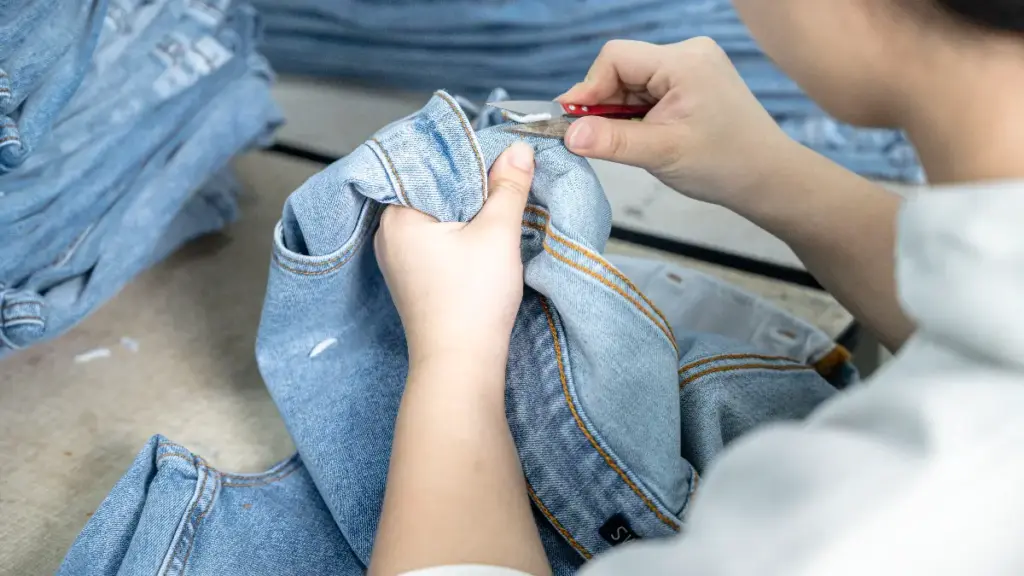
A final inspection for a raw denim garment prioritizes construction accuracy and durability. Checks on stitch quality and seam integrity are critical because the garment is expected to last a long time and evolve with wear. The focus is on the build quality, not the temporary appearance.
Washed denim requires a more complex final audit. Inspectors first confirm the garment still meets size specifications after the aggressive washing process. ثم, they hunt for any wash-related defects that might have been introduced, such as uneven fading, fabric damage from stones or chemicals, or inconsistent distressing that slipped past the initial wash check.
Which Denim Type Fits Different Apparel Markets, Seasons, and Target Customers
Choosing the right denim means matching fabric weight and type to your target customer, the apparel you’re making, and the season you’re selling in. It’s a calculated decision.
Choosing Denim Types Based on Target Customer Groups
You can’t sell heavyweight rigid denim to a customer who values immediate comfort. Aligning fabric to the end-user is the first step in building a successful denim collection.
- Heritage enthusiasts (mostly male, 25-45+): This group wants heavyweight (14 أوقية+), جامد, الدنيم الخام. They buy it for the authenticity and the unique fading potential.
- Premium fashion consumers: Both men and women here look for refined fits. This drives demand for midweight (13-14 أوز) selvedge and, increasingly, stretch selvedge (11-13 أوز) الأقمشة.
- Mass-market customers: For this segment, comfort and accessibility are everything. An 11-12 oz sanforized or comfort-stretch raw-look denim is the standard.
- Gender-specific preferences: Women show a clear preference for midweight (10-12 أوز) stretch raw denim because it offers better comfort and fit. Men still dominate the heavyweight heritage category.
Selecting Denim for Different Apparel Markets
The fabric that makes a great pair of winter workwear jeans will fail in a summer dress. The product category dictates the fabric’s technical requirements, from weight to drape.
- For jeans: Fabric choice scales directly with market segment. Use 6-8 oz for entry-level or warm-weather styles, 11-13 oz for core retail, و 14 oz+ for premium heritage jeans.
- For denim shirts: A standard men’s shirt uses 8-12 oz fabric for year-round wear. أخف وزنا 6-8 oz fabric is better for women’s blouses or any summer pieces.
- For jackets and outerwear: الوزن المتوسط (10-14 أوز) denim provides all-season versatility. For rugged winter and workwear jackets, you’ll need heavyweight (14 أوقية+) raw selvedge.
- For dresses and skirts: Soft apparel requires lightweight (5-8 أوز) الدنيم. This ensures the garment has proper drape and comfort while a dark indigo dye maintains the raw aesthetic.
Matching Denim Fabrics With Seasonal Collections
Your product calendar should be built around fabric weight. Selling a 16 oz jean in July is a losing proposition, just as a 6 oz jean won’t work for a winter collection in a cold climate.
- Fabric weight maps directly to seasonality. As a rule, fabrics under 10 oz are for spring/summer, 10-12 oz is for year-round collections, و 13 oz+ is for fall/winter.
- Spring/Summer lines should feature breathable, lightweight raw-look fabrics (6-10 أوز). This weight is ideal for jeans, قمصان, والفساتين, particularly in women’s and youth markets.
- Fall/Winter lines focus on durability and insulation. الوزن الثقيل (14-16 أوقية+) raw and selvedge denim are marketed as premium investment pieces for this season.
- Evergreen or core collections are built on versatile 11-12 oz sanforized raw denim. It provides a stable fit and has year-round appeal for the mass market, ensuring consistent sales.

How Changhong Helps Brands Choose Denim Fabrics and Washing Effects
Changhong combines in-house denim fabric development and garment washing capabilities to help brands match materials and finishes with their collection requirements.
Fabric Options for Different Denim Collections
Different denim products require different fabric properties. Through its in-house denim mill, Changhong offers a range of denim fabric options for brands developing jeans, السترات, قمصان, and other denim apparel.
The available choices include raw and selvedge denim for heritage-inspired collections, stretch denim for fitted garments, and coated or jacquard denim for distinctive designs. Brands can also explore colored and sustainable denim options for specific market needs.
Changhong can help narrow down fabric choices by considering several factors:
- وزن النسيج: Options range from lightweight 6 أوز إلى الوزن الثقيل 16 oz denim, depending on the garment structure and desired feel.
- تكوين الغزل: القطن, cotton-spandex, and cotton-polyester blends offer different levels of structure, المرونة, والراحة.
- Weave and Color: Twill, jacquard, النيلي, and sulfur-dyed fabrics support different design directions.
- Surface Finish: Brushed, المغلفة, and other treatments create specific textures and visual effects.
This allows brands to evaluate fabric options based on garment design, target customers, and price positioning before confirming materials.
Brands developing their own denim collections can also explore Changhong’s private label and ODM services for customizable styles, الأقمشة, and branding details.
Custom Washing Effects for Different Designs
Fabric selection is only part of the development process. Washing treatments further shape the color, نَسِيج, and overall appearance of finished denim garments.
Changhong offers a range of تقنيات غسل الدنيم to support different design requirements. Stone wash creates a worn-in appearance, enzyme wash produces softer fabric with natural-looking fading, and bleach wash lightens the denim color. Acid wash creates stronger contrasts, while laser wash allows more precise fading and whisker patterns. Rinse wash is also available for brands seeking a cleaner appearance with a softer feel.
The appropriate method depends on the fabric, desired finish, and garment design. Changhong can develop washing samples and adjust processing conditions to achieve the requested appearance before bulk production.
For brands with specific finishing requirements, Changhong also provides custom denim OEM services, allowing them to develop denim products with customized washing effects and garment details.
Matching Fabric and Washing Methods
Fabric and washing treatments need to work together. A heavy denim fabric may suit structured jeans or jackets, while lightweight or stretch denim may better support softer, more flexible styles. The washing method must also suit the fabric’s construction and strength.
Changhong can help brands assess these combinations through fabric recommendations and wash sample development. Brands can review the color, نَسِيج, نعومة, and surface effects of each sample before approving the final specifications.
By coordinating fabric development and washing in one production process, Changhong helps brands create denim collections with consistent material choices and finishes across different styles.
الأفكار النهائية
Raw denim vs washed denim involves several factors that apparel brands need to consider, including target customers, design direction, ومتطلبات الإنتاج. Each type offers different possibilities in terms of texture, تتلاشى, راحة, والتشطيب. These characteristics can influence how a denim collection is developed, positioned, and produced for its intended market.
Changhong supports denim brands with in-house fabric development, a range of material options, and garment washing capabilities. By coordinating fabric recommendations and finishing processes, Changhong helps brands develop denim products that match their design concepts and market requirements.
الأسئلة المتداولة
What is the difference between raw and washed denim?
Raw denim is the fabric in its original, unwashed state—stiff, مظلم, and ready to be broken in by the wearer. This process creates unique, personalized fades over time. Washed denim has already been treated at the factory to be soft, مريح, and often pre-faded right off the shelf.
Does raw denim shrink after washing?
نعم, raw denim shrinks, but how much depends on whether it is sanforized or unsanforized. Unsanforized denim is untreated and can shrink significantly (5–10%), so you often need to size up. Sanforized denim has been pre-shrunk at the mill, so it only shrinks minimally (1-3%). The first wash causes the most shrinkage.
Is raw denim better quality?
“خام” simply means the denim is unwashed; it is not automatically better quality. Quality depends on factors like the cotton fiber, وزن القماش, and how the jeans are sewn. Many premium brands choose raw denim for its durability and ability to create personalized fades, so it is often associated with higher-end products.
Which denim lasts longer?
Raw denim usually lasts longer. Because it has not been pre-washed or distressed in a factory, its cotton fibers are stronger from the start. Distressed jeans are intentionally weakened to create a worn-in look, which shortens their lifespan. With proper care, a pair of raw denim jeans can last for many years.
Is washed denim more comfortable?
نعم, washed denim is much more comfortable right from the first wear. The factory washing process softens the fabric and removes the stiff starch found in raw denim. Raw denim is rigid at first and requires a break-in period to become comfortable as it softens and molds to your body.
Why do brands use raw denim?
Brands use raw denim to offer a more authentic product. It acts like a blank canvas that allows the wearer to create their own unique fades, telling a personal story. This focus on craftsmanship and individuality helps brands build a loyal community and often justifies a premium price. It can also be more sustainable by skipping water-intensive factory washing.