>

ポリエステル vs コットンデニム: あなたのブランドにとってどの生地が勝つか?

ポリエステル vs コットンデニム: あなたのブランドにとってどの生地が勝つか?

共有:

目次

Balancing workwear durability with a strict budget is a constant battle. You want the heritage feel of cotton, but your clients demand garments that last longer and cost less.

Poly denim is the strategic solution, blending natural comfort with synthetic resilience. But is it right for your brand? This guide breaks down the Polyester vs Cotton debate by analyzing their distinct characteristics, performance advantages, and cost structures to help you decide the winner.

What is Poly Denim?

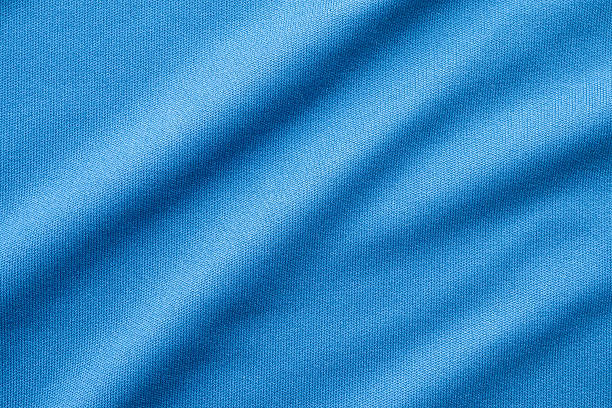
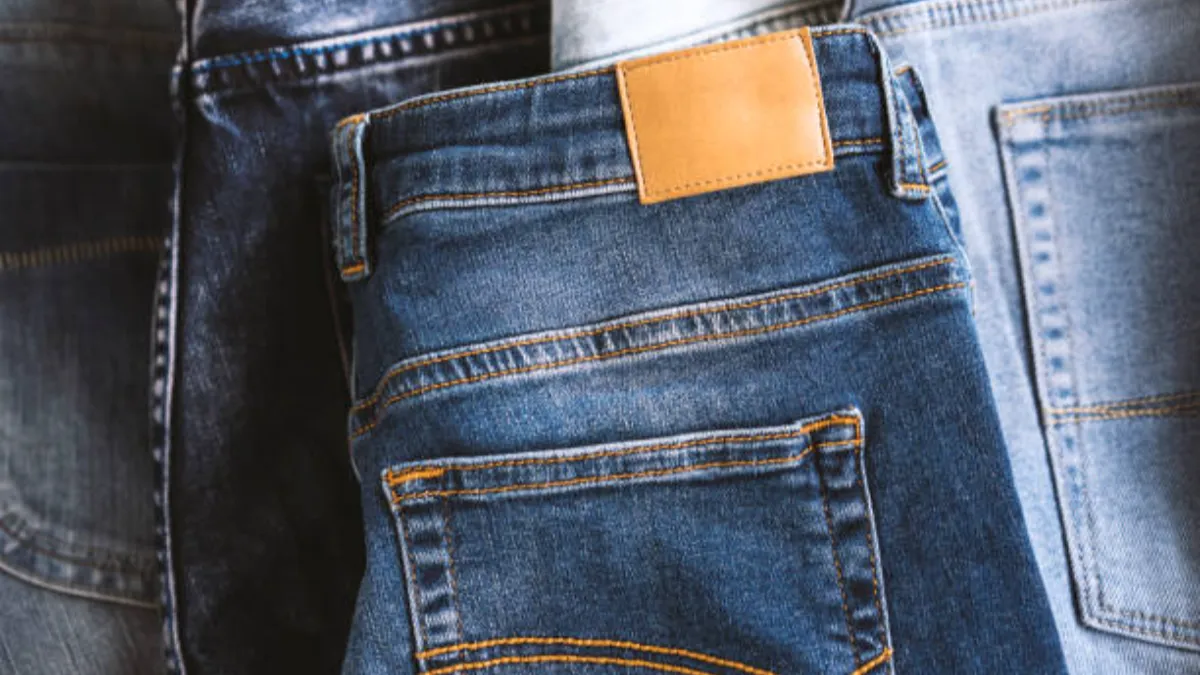
Blue sports clothing fabric football shirt jersey texture

When you encounter poly denim in the market, you are looking at a hybrid textile blending natural cotton fibers with synthetic polyester filaments. Unlike the traditional 100% cotton denim you might be used to, this fabric typically incorporates a strategic 65/35 blend of polyester and cotton.

This specific composition is crucial for your manufacturing needs. It retains the classic diagonal twill weave appearance you expect but significantly alters how the fabric behaves. By weaving 300 に 600 denier texturized polyester yarns into the structure, you get a material that is lighter, more resistant to wrinkles, and possesses higher tensile strength than all-cotton counterparts. This is why it has become the standard for durability-focused apparel lines.

The Comparison of Polyester vs. コットンデニム

As a procurement manager or brand owner, your choice between polyester and cotton denim balances heritage aesthetics with industrial performance. You have to decide if you prioritize the breathable luxury of pure cotton or the mechanical resilience of poly-cotton blends.

To help you benchmark your material selection and calculate potential ROI, we’ve broken down the critical differences below:

特徴 100% コットンデニム Poly-Cotton Denim (ポリデニム)
耐久性 適度; prone to fraying over time 高い; excellent tear and abrasion resistance
コスト効率 より高い ($5 – $22+ per yard) Cost-Effective ($4 – $15 per yard)
Shrinkage 高い; requires rigorous preshrinking 低い; excellent dimensional stability
Wrinkle Resistance 低い; creases easily 高い; maintains crisp appearance
快適 & Feel High breathability; softer hand-feel 良い; modern texturized yarns mimic cotton
Best Application プレミアムジーンズ, fashion apparel 作業服, 制服, budget-friendly lines

Durability and Strength

The primary advantage you gain with poly denim lies in its molecular structure. Polyester filaments boast a tenacity of approximately 4.0 g/tex, which is significantly higher than cotton. When woven into your denim, these filaments act as a reinforcement grid. This means your garments will resist tear propagation and abrasion much better, ultimately extending the lifecycle of your product in harsh work environments.

Evolution of Comfort

You might worry that polyester feels rigid or artificial, a common criticism in the past. しかし, modern manufacturing has bridged this gap. By using air-textured polyester yarns, manufacturers can provide you with poly denim that closely mimics the soft hand-feel of cotton. This allows you to offer the comfort your customers expect while retaining the superior moisture management and durability your bottom line demands.

Craft Your Brand’s Perfect Denim: Integrated Custom Manufacturing

Experience unparalleled denim customization and streamlined production with our vertically integrated, one-stop manufacturing. We combine 20+ 長年の専門知識, 持続可能な実践, and low MOQs to elevate your brand with premium, unique denim.

Get Started →

CTA Image

Dyeing and Quality Standards

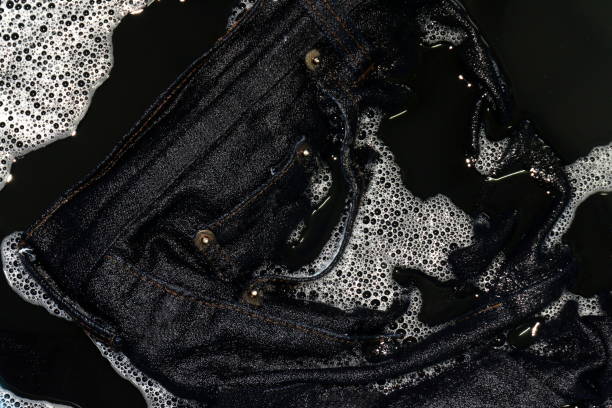
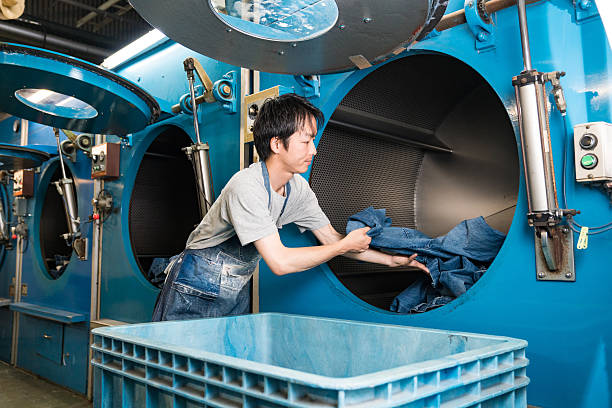
Jeans blue dark soak in sponge washing and wet in sponge water dirty black

To ensure you get top-tier fabric, you must understand that cotton and poly-cotton blends require completely different manufacturing protocols. Treating them the same is a recipe for quality failure.

1. The Dyeing Process

  • 100% コットン: Uses a standard single-phase process (typically Rope or Slasher dyeing with Indigo). The challenge here is ensuring deep indigo penetration to create the desiredring dyeeffect for future fading.
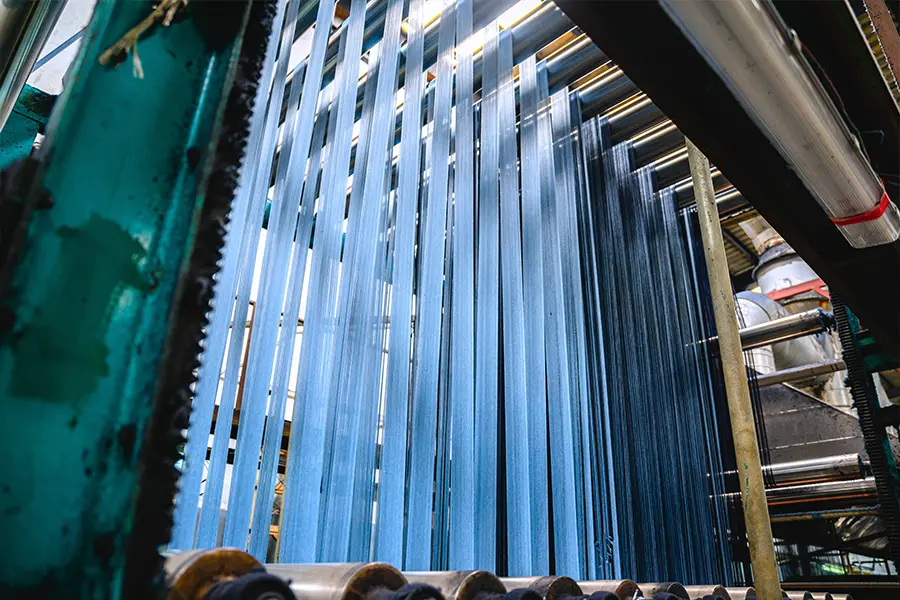
  • ポリデニム: Requires a sophisticated two-phase process. We must use High-Temperature Disperse Dyes for the polyester fiber (at ~130°C) and Reactive or Vat Dyes for the cotton.

Pro Tip: If your supplier tries to dye them in a single bath to save money, you will end up with theheather effect” (speckled, uneven color). Always demand a Delta E color difference of less than 1.0 across the roll.

2. Quality Control Priorities

Since the fibers behave differently, your lab testing checklist should change based on the material:

  • のために 100% コットン (Focus on Stability):
    • Shrinkage Test (AATCC 135): Cotton is unstable. You must verify that shrinkage is within tolerance (いつもの <3%) 洗濯後, or your garments will distort.
    • Skew or Torque: Check that the leg doesn’t twist after laundering.
  • For Poly Denim (Focus on Surface Integrity):
    • Pilling Resistance (ASTM D3512): This is the #1 issue with synthetics. Strong polyester fibers hold onto fuzz balls. Ensure your fabric rates at least a 3.5 または 4.0 grade.
    • Colorfastness to Crocking (AATCC 8): Because disperse dyes sit on the surface of polyester, you must test to ensure the color doesn’t rub off onto other surfaces.

By applying these specific standards, you protect your production line from the specific risks inherent to each fabric type.

Fabric Cost Breakdown

Understanding the price structure helps you negotiate better. You will generally find that poly denim is more cost-effective, typically ranging from $4 に $15 per yard, whereas comparable quality 100% cotton options can start at $5 and go much higher.

This price advantage comes from two main sources:

  1. Raw Material Costs: Polyester fiber is generally cheaper and more price-stable than cotton, which fluctuates with harvest yields.
  2. 生産効率: The higher strength of polyester allows for faster high-speed weaving with fewer yarn breakages, reducing the manufacturing overhead passed on to you.

しかし, price isn’t just about the sticker on the roll. When you factor in the improved dimensional stability of poly denim, you also save money on wastage due to shrinkage and seconds, effectively lowering your total cost of ownership.

How to Choose Between Polyester and Cotton

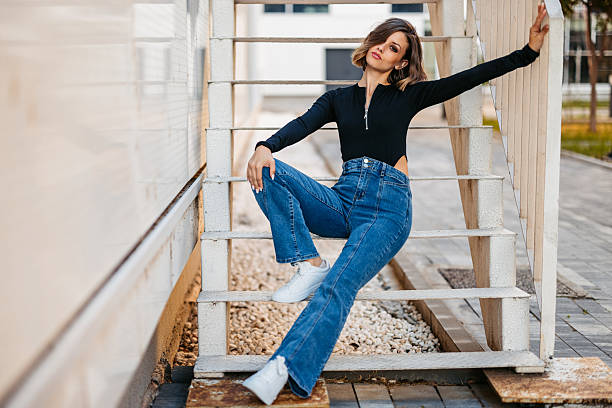
Stylish woman with skateboard sitting on stairs outdoors.

Deciding between these two materials requires analyzing the specific end-use of the garment rather than just looking at the price tag. Here is a guide to help you align the fabric choice with market demands.

When to Choose 100% コットン:

Select pure cotton if your target market prioritizes breathability and vintage aesthetics. It is the ideal choice for premium fashion ジーンズ where a soft hand-feel and natural fading patterns (whiskers and honeycombs) are the main selling points.

When to Choose Poly Denim:

Opt for poly denim when durability and cost control are paramount. This is the strategic choice for:

  • Industrial Workwear: Where tear resistance is critical for safety.
  • Corporate Uniforms: Where consistent color and wrinkle resistance reduce maintenance for employees.
  • Budget-Conscious Lines: Where achieving a competitive retail price is necessary to protect margins.

Care and Maintenance Tips

For apparel brands, providing clear care instructions is a vital part of customer service. Proper maintenance extends the life of poly-denim garments and reduces returns due to damage.

Here are the best practices to include on your care labels or product guides:

  • Temperature Control: Advise washing in warm water (not exceeding 60°C/140°F) to prevent fiber damage.
  • Preserve the Color: Recommend turning garments inside out before washing to reduce abrasion on the dyed face.
  • Avoid Chlorine: Explicitly warn against chlorine bleach, as it can degrade the cotton component of the blend.
  • Ironing: If ironing is necessary, it should be done at a lower setting than standard cotton to avoidglazingthe synthetic fibers.

最終的な考え

結局のところ, the choice between polyester and cotton denim hinges on your specific balance of cost, 耐久性, そして美的魅力. While pure cotton remains the standard for vintage-style fashion, poly-blends deliver the rugged resilience and price stability essential for industrial workwear.

To execute this vision, you need a manufacturing partner capable of handling diverse material specifications. チャンゴン is a leading denim garment manufacturer, providing end-to-end OEMおよびODMサービス. From fabric sourcing to final stitching, we help brands produce high-quality jeans and workwear that meet precise market demands.

よくある質問

Does poly denim fade like 100% コットン? 

Generally, no. Polyester fibers are highly colorfast and hold dye much better than cotton. This is a significant advantage for corporate uniforms that need to looknewfor longer, but it makes poly denim less suitable for fashion lines that require authentic vintage fading orwhiskereffects.

Does poly-cotton denim pill after washing

Pilling can be a concern with lower-quality blends, but it is preventable. High-quality poly denim uses long-staple cotton and air-textured polyester yarns to minimize fiber migration. 調達時, ask your manufacturer if they usesingeingprocesses to burn off protruding fibers, which significantly reduces pilling risks.

Does adding polyester make the denim stretchy

This is a common misconception. Polyester adds strength and durability, not stretch. If you need elasticity for comfort (skinny jeans or active workwear), you must look for a blend that includes Elastane or Spandex, not just polyester.

Is poly denim breathable enough for hot weather

While 100% cotton is naturally more breathable, modern poly denim is often engineered with moisture-wicking properties. For heavy-duty workwear in hot environments, a lighter-weight poly-blend (その周り 9-10 オズ) can actually perform better than heavy cotton by transporting sweat away from the body rather than absorbing it.

Are there eco-friendly options for poly denim

はい. The industry is increasingly moving towards Recycled Polyester (rPET), which is made from post-consumer plastic bottles. Using rPET blended with organic or BCI cotton allows brands to maintain the durability benefits of synthetic fibers while meeting sustainability goals and reducing plastic waste.

author detail

私はエナスです, 広州長虹服装有限公司ゼネラルマネージャー, Ltd. オーバーで 26 デニム業界の年, ファブリック開発全体にわたる専門知識を構築してきました, デザイン, 製造業, そして国際販売. 今日, 私たちは3つの専門工場を運営しています。 19 生産ラインと 500 熟練した従業員, Fashion Novaなどの世界的なファッションブランドにサービスを提供, メイシーズ, オースティン, とヨガジーンズ. そしてチャンホン, 私たちは、トレンドの洞察と職人技を組み合わせた高品質のデニムアパレルをお届けすることに専念しています。.

次のベストセラーデニムコレクションを作りましょう, Info@changhongjeans.com までご連絡ください。.

連絡する

人気のブログ

It seems we can't find what you're looking for.

ブランド向けに調整されたカスタムデニムソリューション

比類のない品質の巧みに作られたデニムアパレル, 精度, とスタイル.