>

4-Way vs. 2-Way Stretch Denim: Making the Right Choice for Your Brand

4-Way vs. 2-Way Stretch Denim: Making the Right Choice for Your Brand

共有:

目次

Why do some jeans hold their shape all day while others bag out by noon? The secret lies in the weave. Whether you’re sourcing your next bestseller or seeking the perfect fit, the choice between 2-Way and 4-Way Stretch directly impacts your production costs and consumer satisfaction. From consumption rates to recovery performance, here is the technical guide to making the right investment.

What are 4-Way and 2-Way Stretch Denim?

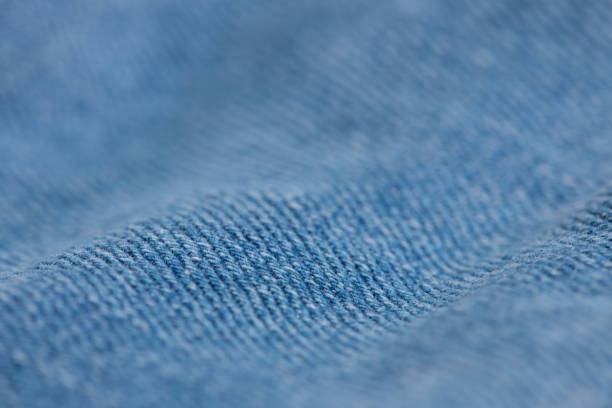
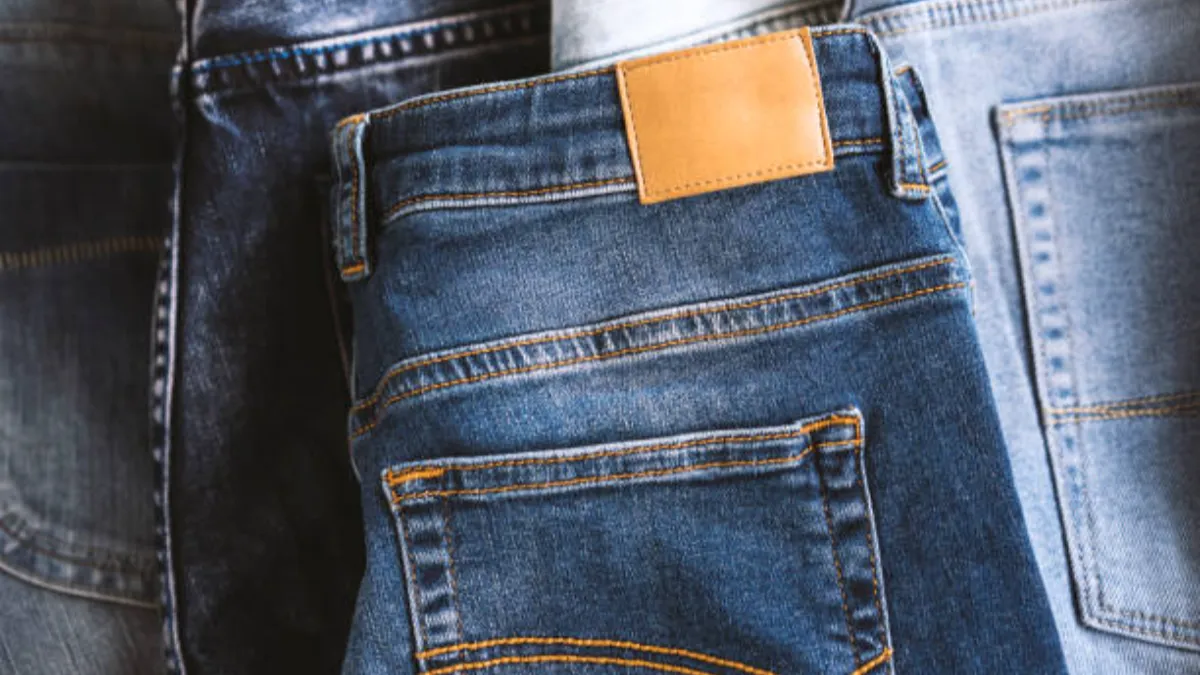
Extreme macro of denim surface. Shallow DOF

Before you dive into pricing or sourcing, you need to understand the mechanical differences in how these fabrics are constructed.

2-Way Stretch: The Industry Standard (Weft-Only)

2-way stretch denim is engineered to stretch in only one direction: almost always horizontally across the weft. This is the standard for most commercial jeans. It provides the necessarygivefor comfort around the hips and thighs while maintaining complete stability in the vertical direction.

4-Way Stretch: High-Performance Evolution (360° Motion)

4-way stretch denim is a high-performance fabric where elastic yarns are woven into both the warp (vertical) and weft (horizontal) directions.

Traditional denim often feels stiff. 4-way stretch changes this by building flexibility directly into the fabric’s entire structure. It allows the material to expand and contract up, down, and side-to-side, creating true 360° mobility.

The Mechanics: Warp vs. Weft Construction

  • The 2-Way Mechanism: The elastic filament (Spandex/Elastane) is inserted only into the weft yarns. The vertical warp yarns remain rigid cotton, ensuring the inseam length remains stable.
  • The 4-Way Mechanism: Elasticity is integrated into the vertical warp yarns as well. This allows the fabric to elongate with the body’s movement (like bending a knee) without pulling the hemline up or creating tension points.

Key Differences: 2-Way vs. 4-Way Stretch Performance

As a buyer, your choice between these two fabrics dictates the final fit and consumer experience.

Elasticity and Range of Motion Comparison

  • 2-Way: OffersComfort Stretch.It is reliable and specific. It allows expansion where needed (waist/seat) but maintains the core structure of the garment.
  • 4-Way: DeliversActive Stretch.It offers a body-conforming fit that moves with the wearer without feeling restrictive, bridging the gap between classic denim and activewear.

Shape Retention and Recovery

Shape retention is a primary concern for consumers.

  • 2-Way Risks: Can be prone tobagging outat high-stress points like the knees after extended wear if the elastane quality is low.
  • 4-Way Solutions: Typically utilizes advanced recovery technology. Because the fabric can snap back from all directions, it resists sagging much more effectively. しかし, this requires precise fabric selection to ensure the mills have properly heat-set the material.

Body Contouring: Which Offers a Better Fit?

  • 2-Way: Best for structured silhouettes (Straight leg, ブーツカット) where the goal is for the fabric to smooth over the body rather than cling to every curve.
  • 4-Way: Ideal forBody-Hugging” 合う (スキニー, Jeggings). It adapts to body volume changes and different body shapes more forgivingly than 2-way fabric.

Shrinkage & Stability: Vertical vs. Horizontal

This is a critical production detail often overlooked during sourcing.

  • 2-Way: Stable lengthwise. しかし, traditional twill weaves are naturally prone toleg twist” (skewing) after washing if the fabric wasn’t skewed properly at the mill.
  • 4-Way: Because there is elastic in the vertical warp, vertical shrinkage is the primary concern. Patterns must be adjusted to account for high shrinkage rates (often requiring negative ease) to prevent the final garment from becoming too short or tight after デニム洗濯.

From Concept to Collection: Your Expert Denim Manufacturing Partner

Leverage our vertically integrated factory for unparalleled control over your designs, from custom fabrics and washes to unique brand details. We empower brands of all sizes with low MOQs, 持続可能な実践, and a seamless process from inquiry to delivery.

Start Your Project →

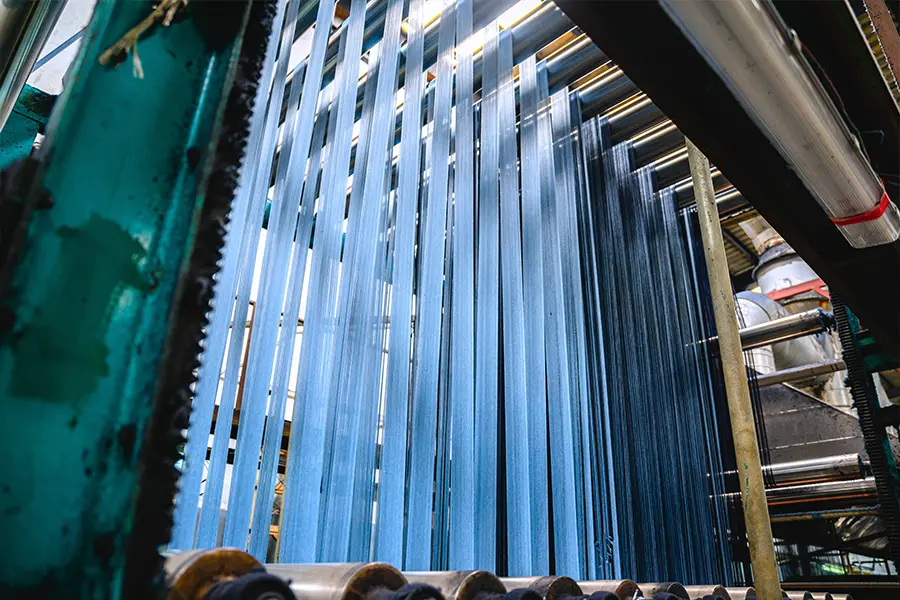
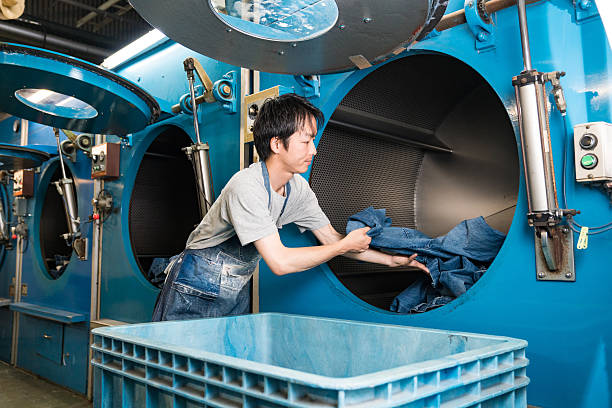
Custom denim fabric manufacturing process

What Makes Them Different?

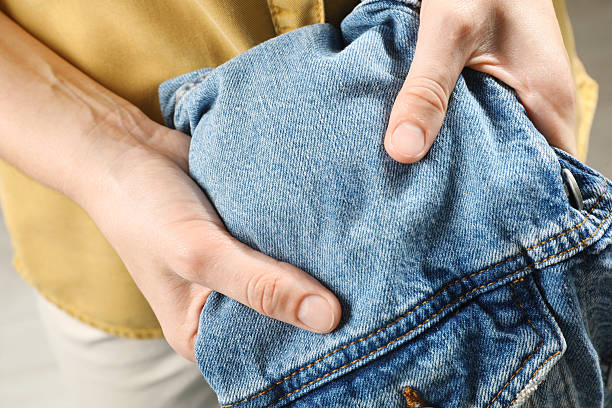
Washing clothes. Woman holding jeans with stain, closeup

Standard Compositions: Cotton-Poly-Spandex Blends (2-Way)

The classic formula for 2-way stretch is often a “98/2” blend (98% コットン, 2% エラスタン).

しかし, a more commercial mass-market blend often looks like:

  • 75% コットン / 23% ポリエステル / 2% Spandex.
    This trio offers the hand-feel of cotton, the durability of polyester, and the necessary flexibility of spandex.

Advanced Technology: Dual-Core & Multi-Directional Yarns (4-Way)

4-way stretch requires more sophisticated engineering to prevent the heavy fabric from sagging under its own weight.

  • Dual-Core Technology: This involves wrapping a cotton shell around two inner filaments: one elastane fiber for instant stretch, and a stronger filament (like LYCRA® T400®) for recovery and strength.
  • Core-Spun Yarns: Essential for protecting the delicate elastane inside a cotton sheath, maintaining the authenticdenim lookdespite the high synthetic content.

The Impact of Elastane Percentage on Weight and Handfeel

Contrary to popular belief, a higher spandex percentage does not always equal better performance.

  • 1% エラスタン: Provides a rigid look with slight comfort.
  • 1–4% Elastane: The sweet spot for high-performance stretch. Even in technical weaves, the final elastane content usually remains low (例えば, 1.78% に 2.03%) to avoid a synthetic, “rubbery” 手触り.

Which Denim Fabric Should You Choose?

Personal preference shouldn’t drive this decision. その代わり, you need to align the デニム生地 performance directly with your product line and target demographic.

The table below outlines the ideal applications for each fabric type to help you align your material sourcing with your design intent.

Quick Comparison: Best Use Cases

Application Factor 2-Way Stretch
(The Industry Standard)
4-Way Stretch
(The Performance Choice)
Ideal Fit Straight, ブーツカット, Regular Fit. Best for cuts that need to drape and hold a vertical line without clinging. スキニー, Super-Skinny, Jeggings. Essential forsecond-skinfits that must contour to every curve.
Target Demographic Men’s Market & Heritage Lines. Consumers who want thelookof rigid denim but need hidden comfort. Women’s Market & Active Lifestyle. Consumers prioritizing shapewear effects (“sculpting”) or high mobility.
Garment Types Classic 5-pocket jeans, デニムジャケット, オーバーオール, Workwear-inspired pieces. Yoga-jeans, Commuter cycling denim, High-fashion bodysuits, Maternity denim.
Aesthetic Goal Authentic Denim. Preserves the traditional slub character and rugged look of vintage jeans. Modern/Tech. Often has a cleaner, flatter surface appearance suitable for clean washes.
Key Advantage 構造. Hides body imperfections by skimming over the skin rather than squeezing it. Freedom. Allows for deep knee bends and athletic movement without restriction.

Cost-Benefit Analysis for Apparel Brands

While the table above covers design utility, the financial implications are equally important for your margin strategy. Don’t just look at the denim price per yard. The real cost driver is the total consumption per garment.

  • 2-Way Stretch (The Margin-Friendly Option):
    • Lower Efficiency Cost: 2-way fabric is stable and typically comes in standard widths (58-60″). This allows for tight marker layouts and lower fabric waste.
    • Strategic Use: Ideal for core, high-volume SKUs (Stock Keeping Units) where maintaining a competitive retail price point ($40-$80) is essential.
  • 4-Way Stretch (The Premium Investment):
    • Higher Sourcing Cost: The complex dual-core spinning and heat-set finishing make the fabric yardage more expensive upfront.
    • The HiddenYield” 料金: Be aware of the consumption trap. 4-way denim often has higher shrinkage rates (up to 12-15% vertical shrinkage) and sometimes narrower cuttable widths due to elasticity.
      • Example: A jean that requires 1.2 yards of 2-way fabric might require 1.4 yards of 4-way fabric. You must calculate your BOM (Bill of Materials) based on this higher yield.
    • Strategic Use: Best reserved for premium tiers ($100+) または “Technical Denimcollections where the higher price can be justified by marketing benefits like “360° Sculpting” または “Shape Retention.

How to Find the Right Partner and Manage Your Costs

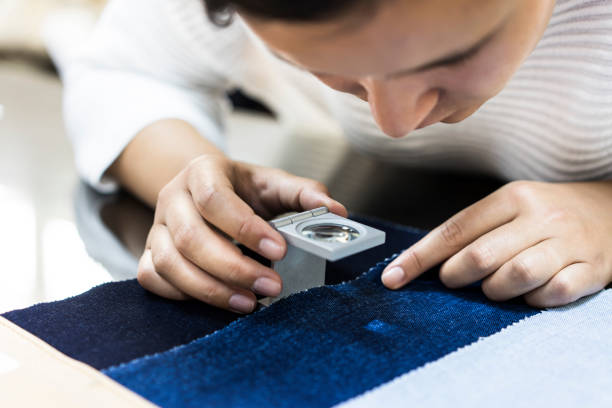
Young woman examining fabric quality with magnifier

Pricing Differences: Why 4-Way Stretch Costs More

卸売 denim in the U.S. typically ranges from $4.99 に $9.75 per yard. 4-way stretch sits at the higher end of this spectrum. The cost is driven by:

  1. Patented Fibers: Using branded fibers like LYCRA® dualFX® or T400®.
  2. Finishing Processes: 4-way requires specialized heat-setting and compressive shrinking to stabilize dimensions.

How to Find Reliable Factories

When vetting suppliers or instructing your garment manufacturer to source fabric, do not just ask forstretch denim.You should verify:

  • ASTM D3107 Test Results: This measures fabric stretch and growth (回復). Look for lowgrowthnumbers to ensure no knee-bagging.
  • 重さ: Confirm the weight (9.5–12.5 oz is standard) matches your season.
  • Width: 4-way stretch often has a narrower usable width due to shrinkage; ensure this fits your marker layout.

MOQ and Lead Times for Specialized Stretch Fabrics

  • Wholesalers: Sell by the roll (approx. 100 yards) or bolt (15 yards). Good for sampling.
  • Direct-from-Mill: Requires higher MOQs (often 3,000+ yards) but allows for custom blends (例えば, adjusting the polyester content for strength). Buying direct offers the most control over thetech recipeof your fabric.

最終的な考え

Choosing between 2-way and 4-way stretch goes beyond technical specs. This decision ultimately defines your brand’s identity. 2-way provides the reliable, structured comfort expected of classic jeans. 4-way delivers the premium, body-hugging performance required for the modern, active consumer.

しかし, selecting the right fabric is only half the battle. Transforming high-performance stretch denim into a perfect-fitting garment requires a manufacturing partner who understands critical technical details like shrinkage control and pattern engineering.

チャンゴン, we specialize in manufacturing high-quality denim garments. We leverage our deep industry connections to source the best fabrics and apply our technical expertise to handle complex productions—whether it’s vintage 2-way or technical 4-way stretch. We ensure your designs are produced with precision, minimizing risks like leg twist or puckering.

Ready to bring your collection to life? Explore our OEM & ODM manufacturing capabilities at Changhong.

よくある質問

What is the difference betweenComfort Stretch” そして “Power Stretch”?

These terms define the degree of stretch, not just the direction. Comfort Stretch (common in 2-way denim) typically offers 10–35% elongation, designed for ease of movement without altering the silhouette. Power Stretch (often found in 4-way denim) exceeds 40% elongation with highretractive force,” engineered to sculpt the body and eliminate waist gaps.

Does 4-way stretch denim loosen up over time?

はい, all stretch denim relaxes with wear. しかし, 4-way denim made with dual-core technology (エラスタン + polyester recovery fiber) will loosen significantly less than generic spandex blends. の “growthshould be minimal if the fabric was properly heat-set.

Is 2-way stretch denim more durable than 4-way?

Generally, yes. 2-way denim often has a simpler construction with more cotton stability in the warp. 4-way stretch, while durable, contains more synthetic filaments that can be sensitive to high heat (アイロンがけ) or abrasive friction over the years of use.

Can you apply heavy stone washing to 4-way stretch denim?

You must be careful. Heavy 石の洗浄 or bleaching can damage the delicate elastane fibers, causing them to break (resulting inbubblingon the fabric surface). 4-way stretch usually requires gentler enzyme washes to preserve the elasticity.

Which stretch type is better for plus-size denim?

4-Way stretch is typically superior for plus-size applications. The 360° mobility molds to body curves more comfortably without creating pressure points or waist gaps, whereas 2-way stretch can sometimes feel restrictive when sitting down.

author detail

私はエナスです, 広州長虹服装有限公司ゼネラルマネージャー, Ltd. オーバーで 26 デニム業界の年, ファブリック開発全体にわたる専門知識を構築してきました, デザイン, 製造業, そして国際販売. 今日, 私たちは3つの専門工場を運営しています。 19 生産ラインと 500 熟練した従業員, Fashion Novaなどの世界的なファッションブランドにサービスを提供, メイシーズ, オースティン, とヨガジーンズ. そしてチャンホン, 私たちは、トレンドの洞察と職人技を組み合わせた高品質のデニムアパレルをお届けすることに専念しています。.

次のベストセラーデニムコレクションを作りましょう, Info@changhongjeans.com までご連絡ください。.

連絡する

人気のブログ

It seems we can't find what you're looking for.

ブランド向けに調整されたカスタムデニムソリューション

比類のない品質の巧みに作られたデニムアパレル, 精度, とスタイル.